

Zimbabwe Part 2 - Matobo and Hwange National Parks
After our short stay at Nata, Botswana, we made our way to the border crossing into Zimbabwe at Plumtree. This was easier than the crossing at Beitbridge, but still far from easy.
Between the fees and a process that is so obfuscated that it encourages the touts to shake down visitors for extra fees to navigate, it doesn’t feel like Zimbabwe is trying to welcome tourists. Took about 90 minutes in total to exit Botswana and enter Zimbabwe.
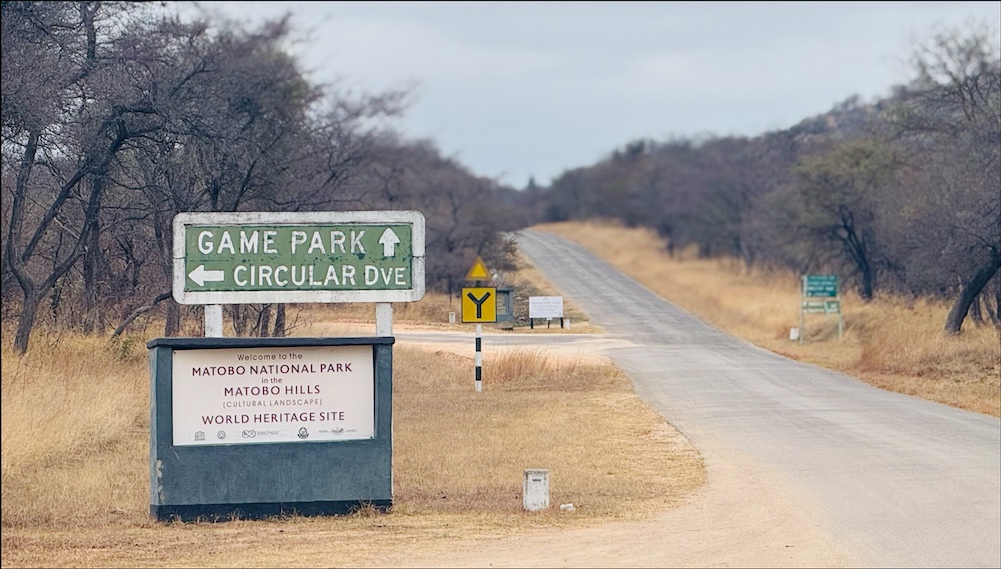 Entrance to Matobo National Park
Our overnight stop was near Matobo National Park, in the central western part of the country, at Big Cave Lodge and Camp. The weather on arrival was cool and overcast with some wind making for some not-so-great birding but possibly other opportunities. We found the manager of the lodge (and guide) after navigating to the campsite and asked for some tips and he suggested a loop through the national park to possibly see some rhinos and definitely see some cave rock art.
On arrival at the park entrance where we paid our entry fees, we inquired about getting a ranger to assist with finding rhino per the guidance from the lodge manager. She got on the phone and arranged a meetup down the road a ways from the entrance with a ranger guide, who also happened to be her husband. He jumped in the vehicle with us and took us around to the north end of the park to meet up with some tracker guards.
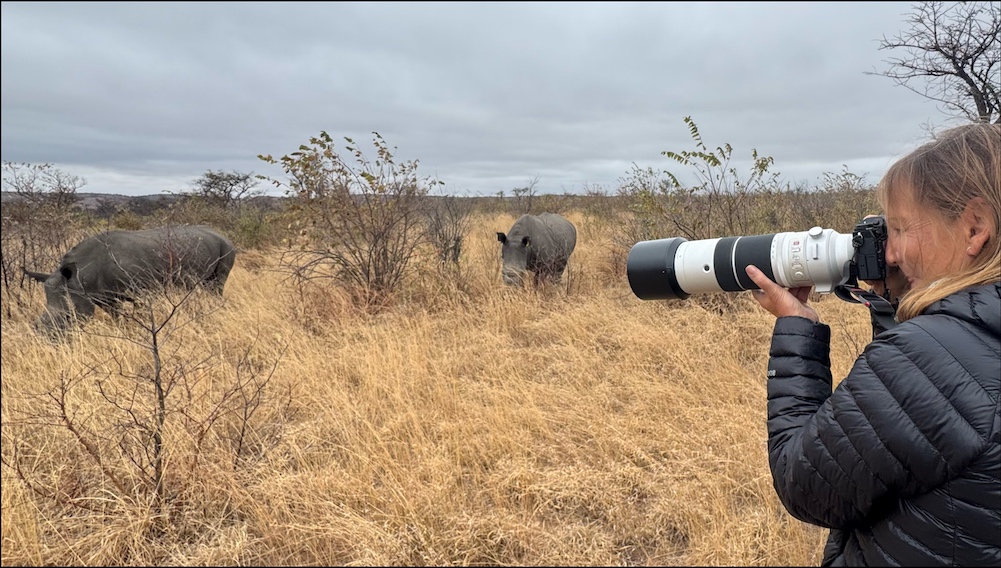 Karen up close to white rhinos in Matobo
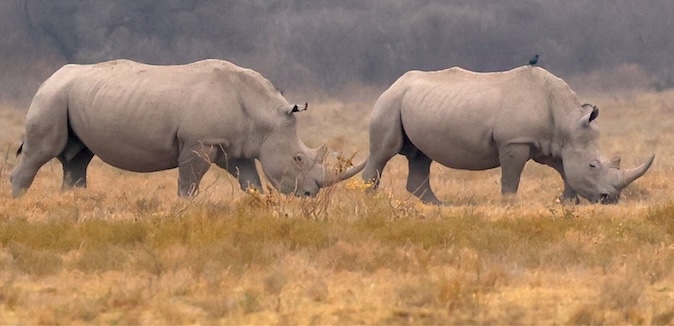
This was a cool experience as we were able to quietly walk up to two young rhino bulls for some closeup photos. These white rhinos were chill and mostly comfortably with us being around, if a bit shy. We hung out about as long as we were allowed before tipping the guards and returning to the ranger camp. As far as we can tell these guards are assigned to follow these rhinos everywhere to prevent poaching. Extreme measures in place to protect these vulnerable creatures.
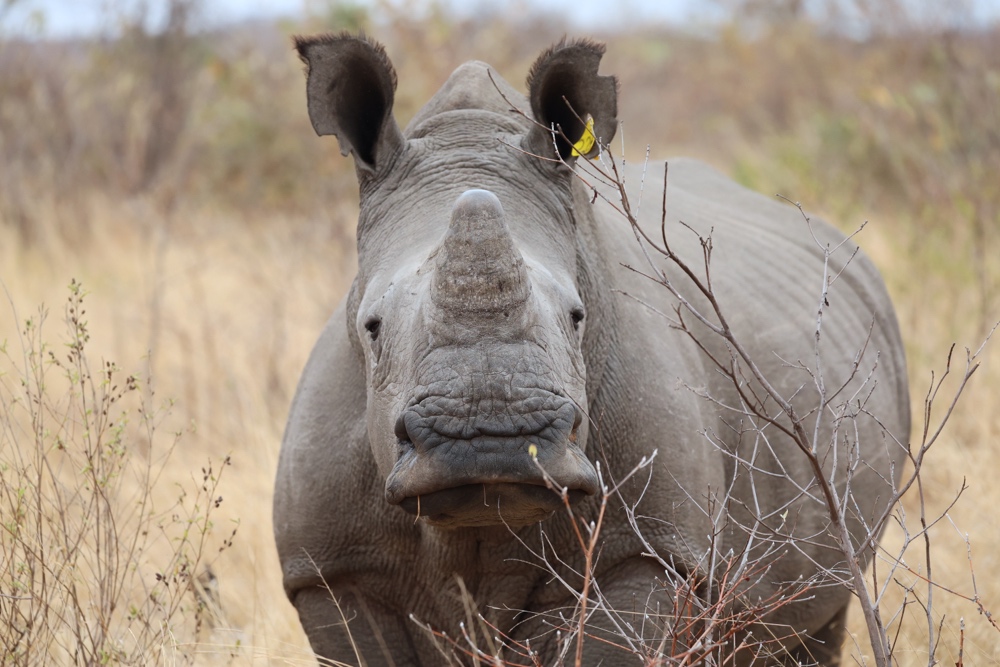 White rhino at Matobo National Park
Ken mentioned on our drive today that we’ve seen more rhinos (at least 9) on this trip,including two black rhinos, than we have lions. Given we struck out completely on rhino sightings two years ago this has been an ok compromise. Still hoping for more lion activity.
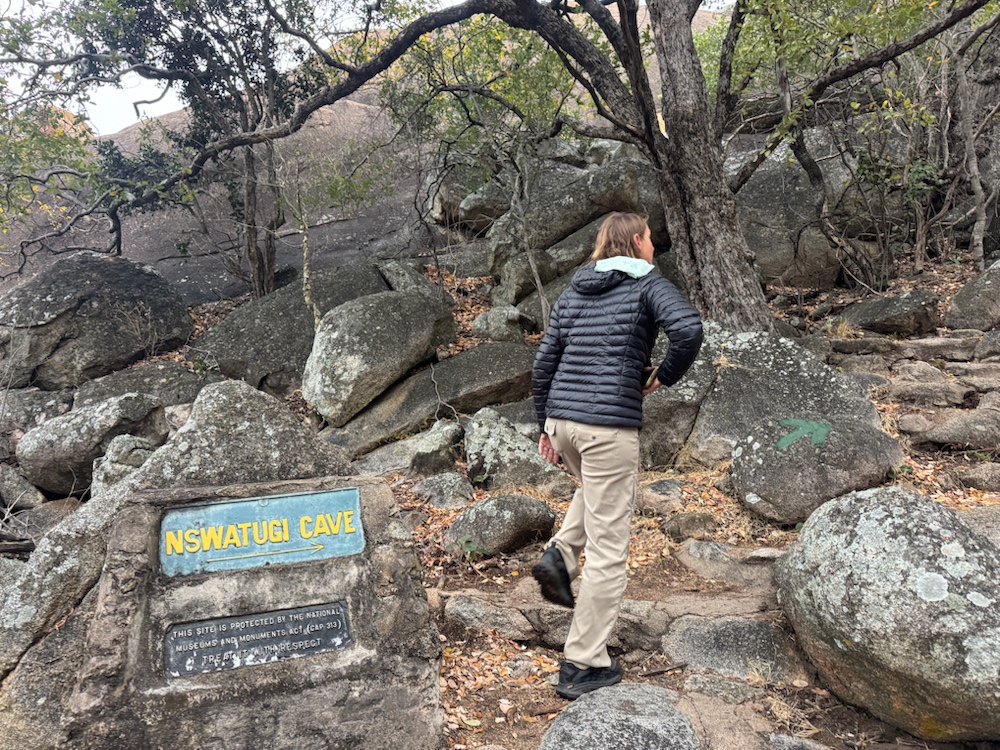 Climbing trail to Nswatugi Cave pictographs
After some mis-guided navigation by me trying to find some newer rock art, we made our way to the well known Nswatugi Cave paintings, near the top of a hill towards the southwest part of the park. We parked in a way that allowed us to take the longer hike in, a welcome opportunity to stretch our legs.
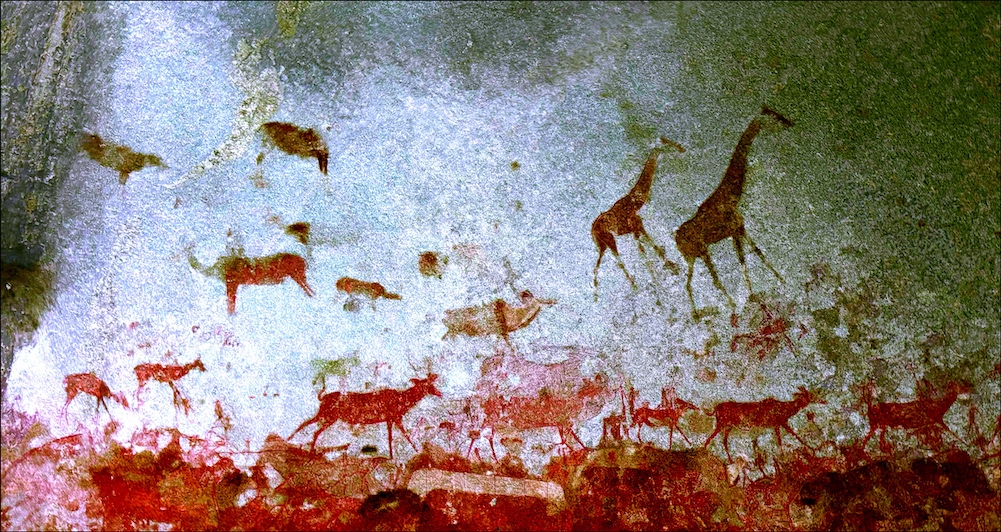 San pictographs in Nswatugi Cave, enhanced with iDStretch
Some research I’ve done since visiting the San rock art in Tuli and now the Nswatugi site indicates that some folklore claims on the age of the pictographs are exaggerated: we’ve heard 20,000 years, 15,000 years, etc. The oldest directly dated rock painting is about 5,500 years old, but some of the art may very well go back 10,000 years. The panel in the cave was massive and beautiful, though often confusing as it looks like some more modern painting had been done over parts of the old stuff.
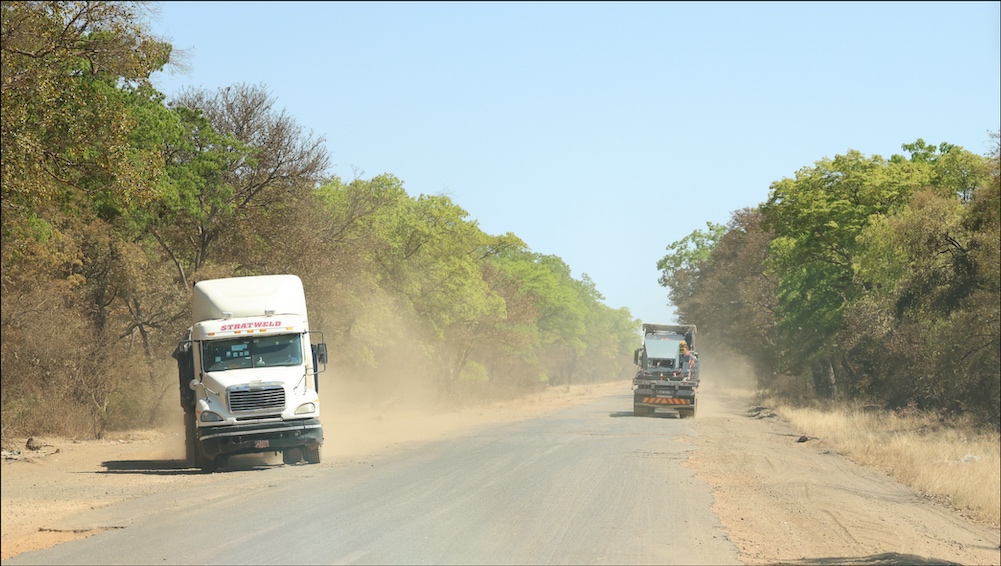 The chaos of A8 from Bulawayo to Hwange
After chatting with Ken’s friend Wolf while in Gonarezhou we were nervous about the drive north from Matobo to Hwange National Park. Wolf claims it is the worst road he’s been in on all of Africa, and he’s been all over. Indeed it was awful, and it astonishing to think that A8 is the primary logistics corridor from Victoria Falls and Hwange down to Bulawayo, the second largest city in Zimbabwe. It is a mad free-for all as big trucks carrying loads, public buses, and private vehicles all try to make their way along the “tar road” that is littered with nearly invisible potholes. We called them pothole trenches: they run the entire width of the road, are sometimes 2 feet deep, and 1-3 feet wide. They sneak up on you and your only option is to slow to a stop and take your poison, or divert to the sand tracks on the side. As a result you see scenes like the photo above: remember this is a “drive on the left” country. We have a lorry taking up the sand on the left coming straight at us, another one on the right side going our same direction. This lasted maybe 100-150 miles. We can only imagine the economic toll this takes on the country - we saw a broken down bus with passengers, burnt out shells of trucks that were abandoned, and quite a few truckers pulled over with their vehicles assessing damage.
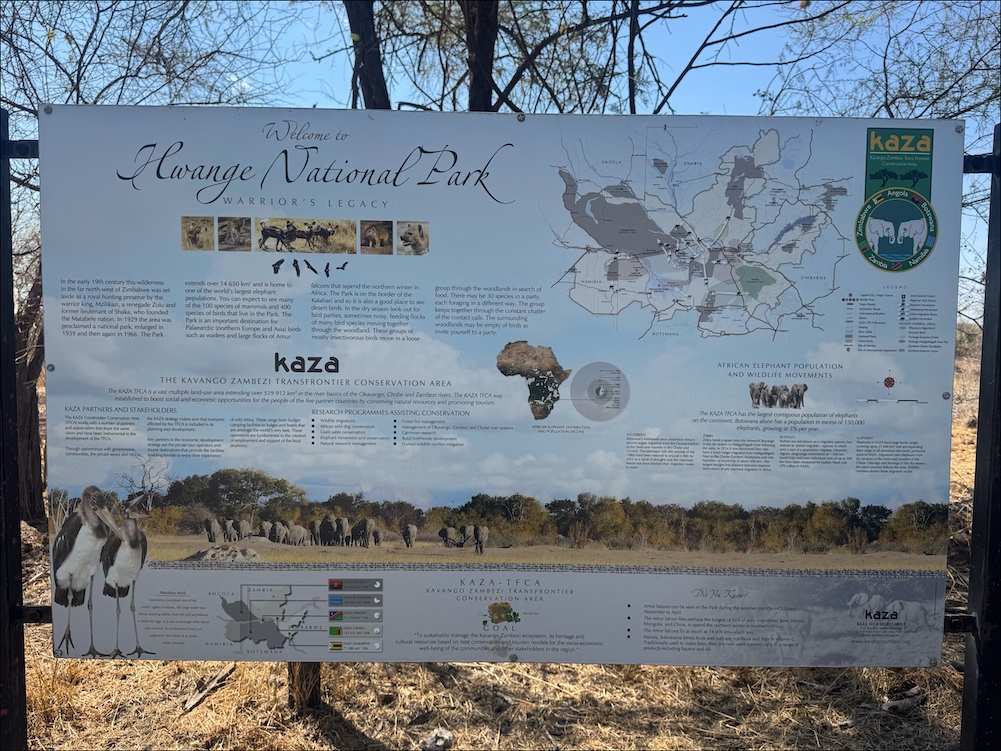 Entering Hwange National Park
With relief we turned off to the entrance road to Hwange National Park, a standard African dirt and gravel road with periodic washboarding. We came in through the camp main entrance on the southeast side and were greeted by friendly park staff where we paid our remainder fees.
We heard of some lions near a pan a bit off our track to camp, but we had plenty of time so we diverted there to have a look-see. We climbed up into the hide overlooking the pan and took note of the birds and some other common critters in the area. Eventually we noticed a park game drive vehicle parked across the pan near a tree, and after some bino scanning and telephoto photography we noticed three lionesses laying in the shade of the tree. We jumped in our vehicle to try to get closer, but the road just didn’t cooperate and our vehicle was not allowed to approach like the official game drive truck. It was good to see lions again but we are still awaiting our “lions lounging around a kill” sighting.
My navigation skills were a bit off after this stop; not directionally but taking into consideration length of travel and sunset. We had to be in camp before dark and I could tell soon after we started a bigger loop to get us around to camp that we would miss the mark. Using Gaia I was able to find some cutoff roads to get us close to on track.
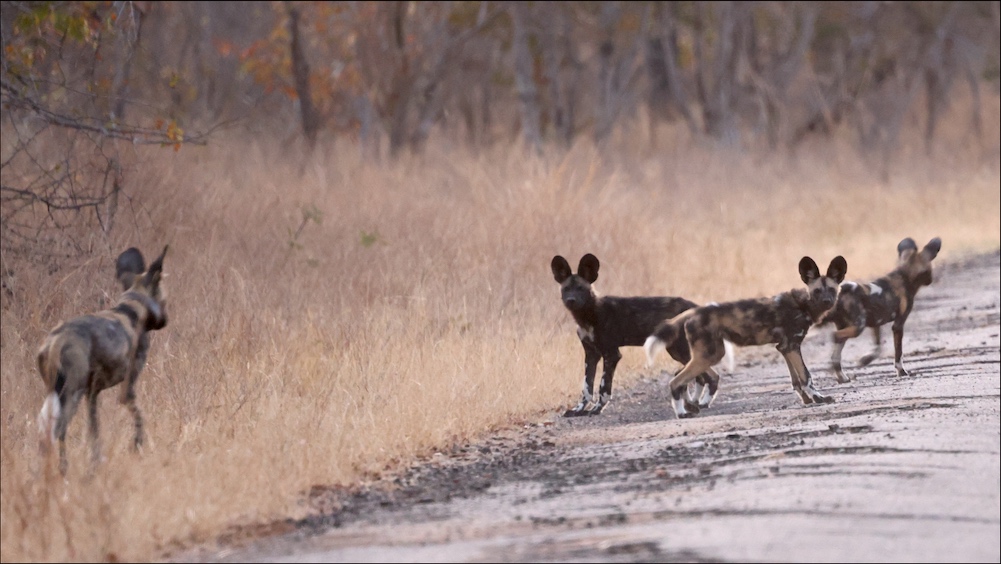 Trinity and her three wild dog puppies
A fortunate side effect as we closed in on our camp at sunset: 4 wild dogs in the road. It was the injured female Trinity and her three ward puppies (might be her pups, might not). Trinity was fairly spooked by us (and some other noise that she heard in the woods to the right), but the puppies kept coming towards the vehicle to sniff us out.
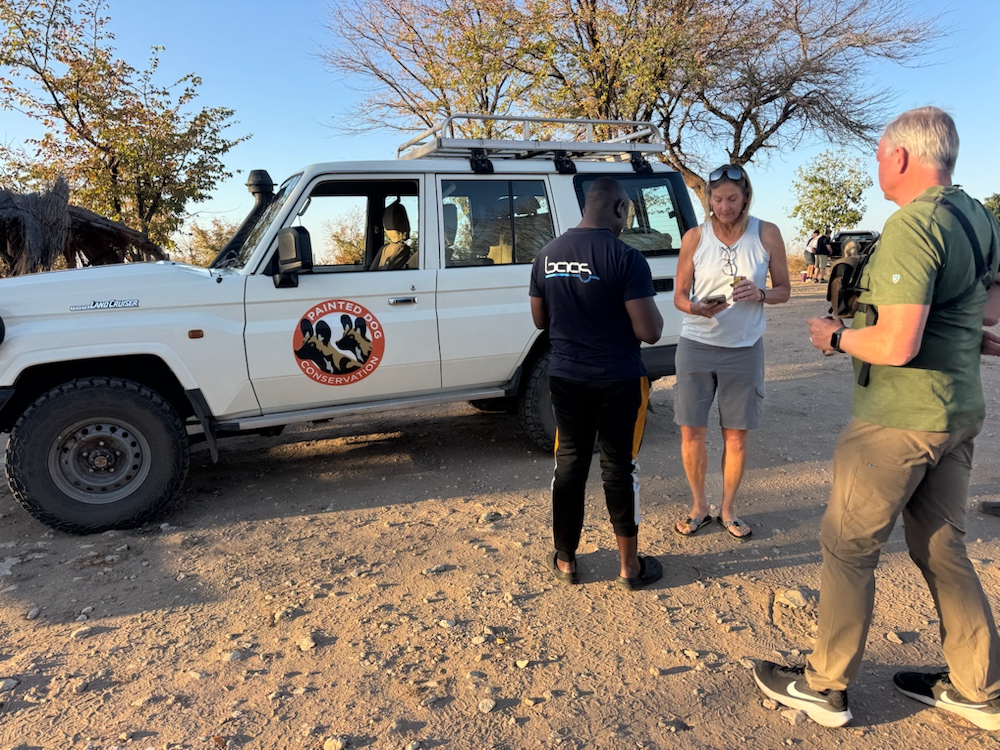 Sharing information with Painted Dog Conservation
We told the camp host the next day and he immediately got the local wild (aka painted) dog conservation group involved. Two reps from the team came to meet with us, get exact coordinates on where we saw them, and get the photos for identification. This is how we know the adult is Trinity; she hadn’t been tracked by them in over a year and had previously had a leg injury on the same leg. It was too late in the day by the time we talked to them, but they planned to go out the next morning in search of her (and her VHF collar) to dart her and provide some medical care.
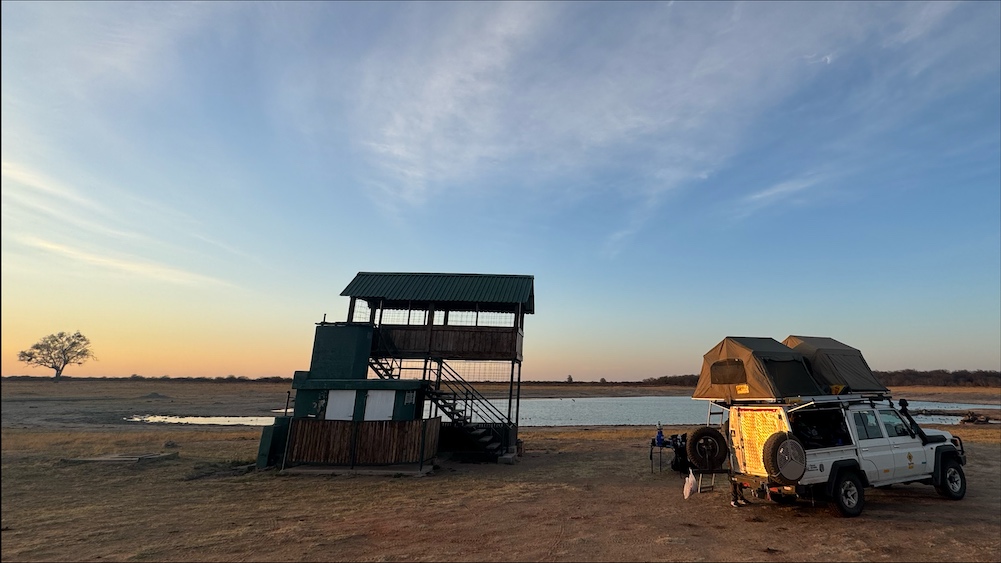 Camp at Guvalala Pan
All three of our camps were “exclusive” (basically buying out the camp) and not inexpensive: $150, $200, and $200. The first camp was on a pan and was beautiful and truly isolated - we never saw another vehicle. Elephants descended on the pan at dusk creating quite the show, and one stood between us and the pan just staring us down. For a long time. Maybe 2 or 3 hours later Ken and I looked out of our rooftop tent to see the same elephant staring right at us.
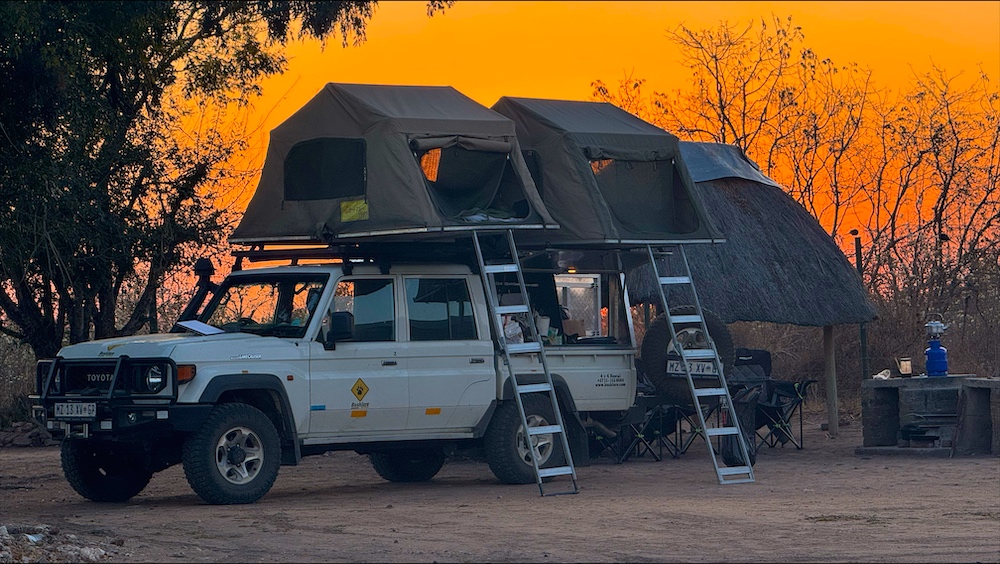 Camp at Masuma Dam
The next night was at Masuma Dam, a beautiful camp but sort of a highway lay-by for Hwange. It is a very popular hide to visit with a large number of hippos and likely elephant activity. We were spoiled by Guvalala thinking we’d have the place to ourselves, but at about 4-4:30pm a group of maybe 10 folks staying a nearby lodge moved into the hide: food, drinks, chairs, and lots of loud-ish conversation that had nothing to do with the wildlife we were seeing. To make matters worse, because of some assistance the lodge is giving to the park they allow their guests to stay at the hid until 7pm (well after dark). So we had a crowded hide at our exclusive camp until darkness fell.
The spectacle for the evening was a hippo giving birth, and the newborn dying. Lots of speculation and opinions about what was going on but all I saw was this: almost every hippo in a circle around mom witnessing the birth, a very young hippo circling the rear end of mom as she swam and turned in tight circles as the baby emerged. The young hippo was chasing and putting its mouth on the newborn.
Apparently a similar process occurred the day before. I have no conclusions to draw from this other than that I never saw an adult male involved in the process at all.
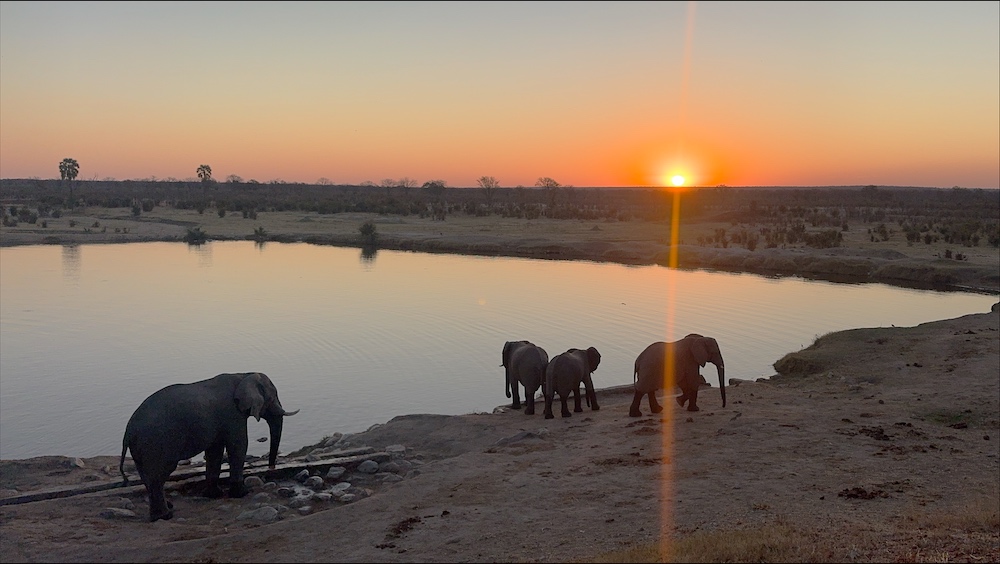 Sunset elephants at Masuma Dam
I mostly stayed away from the hide as I was tending the fire and making focaccia to go along with our pasta dinner. I did come back to take some nice shots of the elephant family that came to drink from the pan and the water trench nearby.
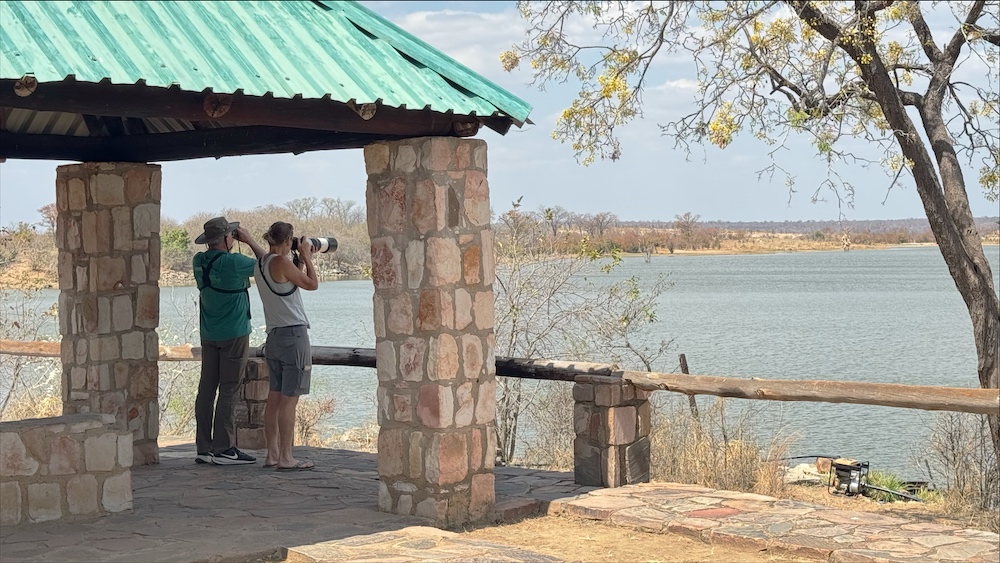 Enjoying solitude at Mandavu
Our final night was back to seclusion at Masuma Dam, a fairly dilapidated camp towards the north of the park. Their solar power is down (the two staffers asked to use my solar to charge their phones, which of course we supported), they have to run a petrol-powered pump down by the water to bring non-potable water into the camp, clogging the plumbing lines with muck. Lots of birds throughout the large lake formed by the dam, and it was fun watching our two camp staffers go out fishing for bream along the shore before sunset. The two women have learned to stay far from the shoreline when fishing. Big crocs everywhere.