

Antelope of Southern Africa
I love antelope, especially the variety of sizes, markings, and horns that we see while roaming southern Africa.
I’ll keep this post updated with representative photos of the species I encounter. These are mostly chronologically organized based on when I took the photo.
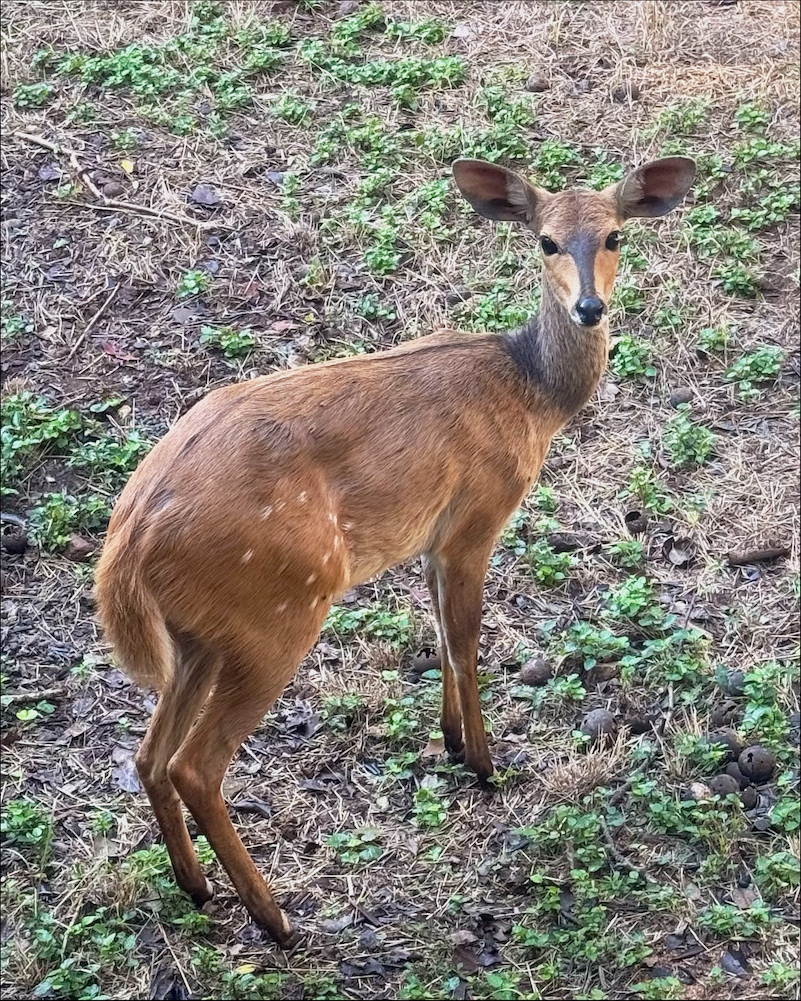 Cape Bushbuck female at Crocodile Bridge / Kruger
It seems like every bushbuck I encounter is a camp resident and domesticated. We had “bucky” the bushbuck who hung out with us at camp in Ivory Wilderness in 2024, and this pretty lady who was grazing in a staff house backyard at Crocodile Bridge in Kruger Park, South Africa. These are smallish, about the size of a 1-2 year old white-tailed deer. Females don’t have horns.
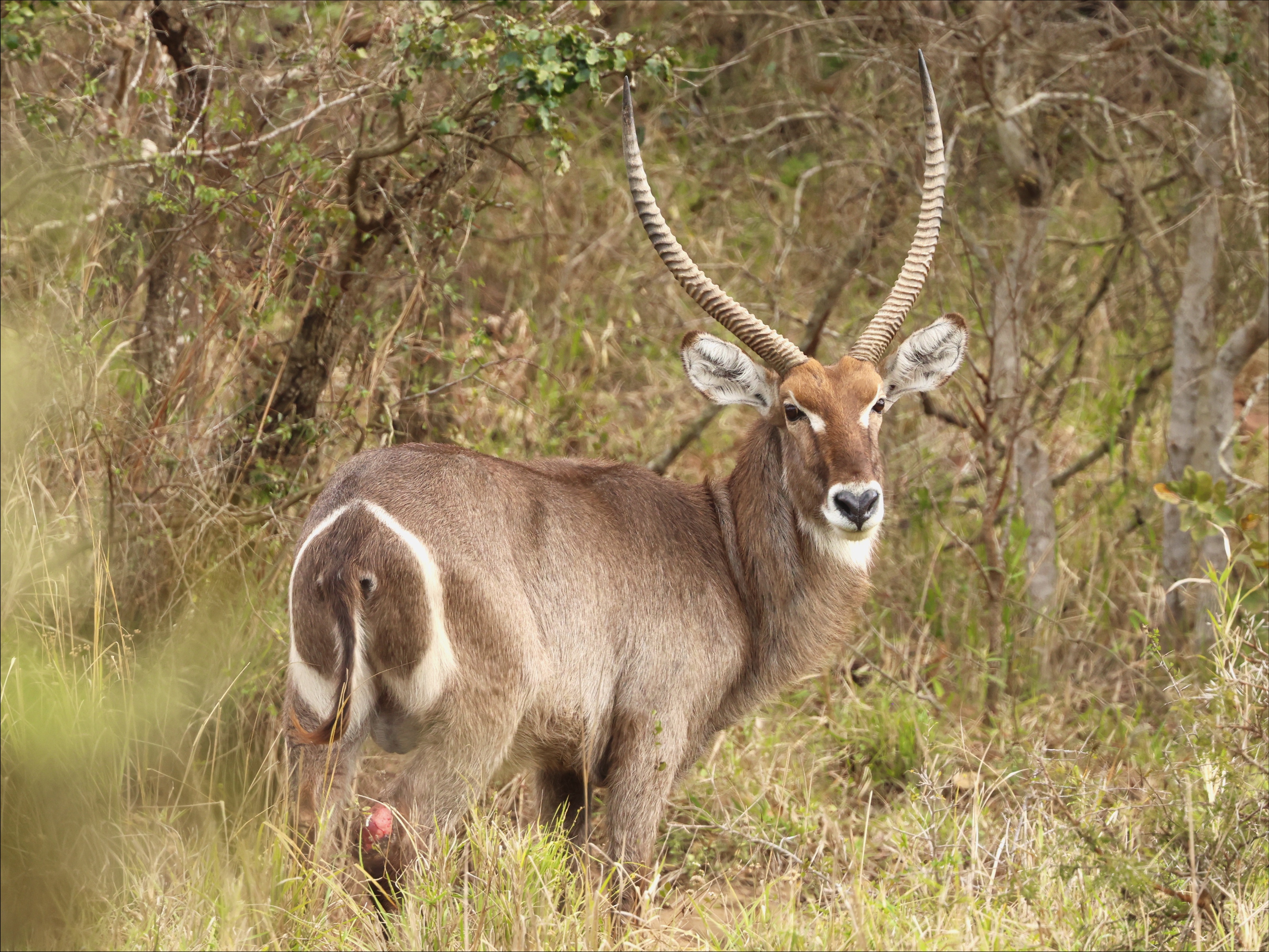 Waterbuck male in southern Kruger
Waterbuck are majestic and fuzzy, and are often identified from a distance by the circle around their butts.
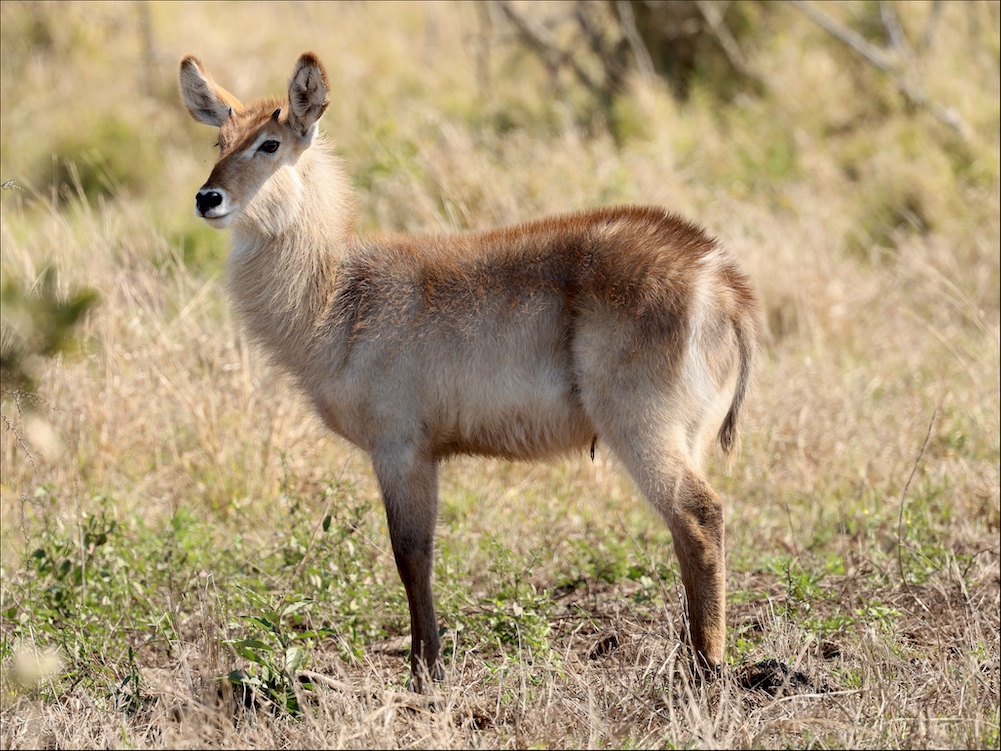 Waterbuck female in southern Kruger
Waterbuck females are no less cuddly looking and lack the awesome horns. There’s a separate subspecies up north in sub-Saharan Africa that have a full white butt area and lack the ring - they make up a separate group (defassa) than the common (ringed) group found down south.
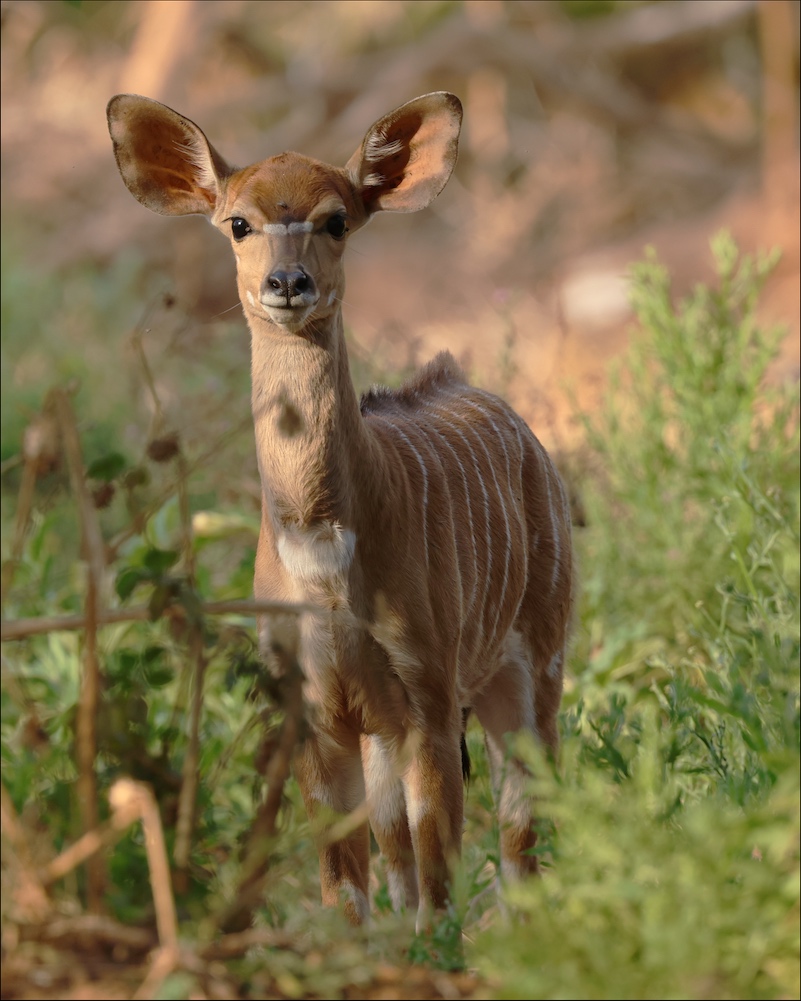 Nyala female in Pafuri
Around Pafuri and Baobob Hill House we see lots of nyala, with the striking feature being the big difference between the male and female. In fact, nyala have the highest level of sexual dimorphism amongst all the antelopes.
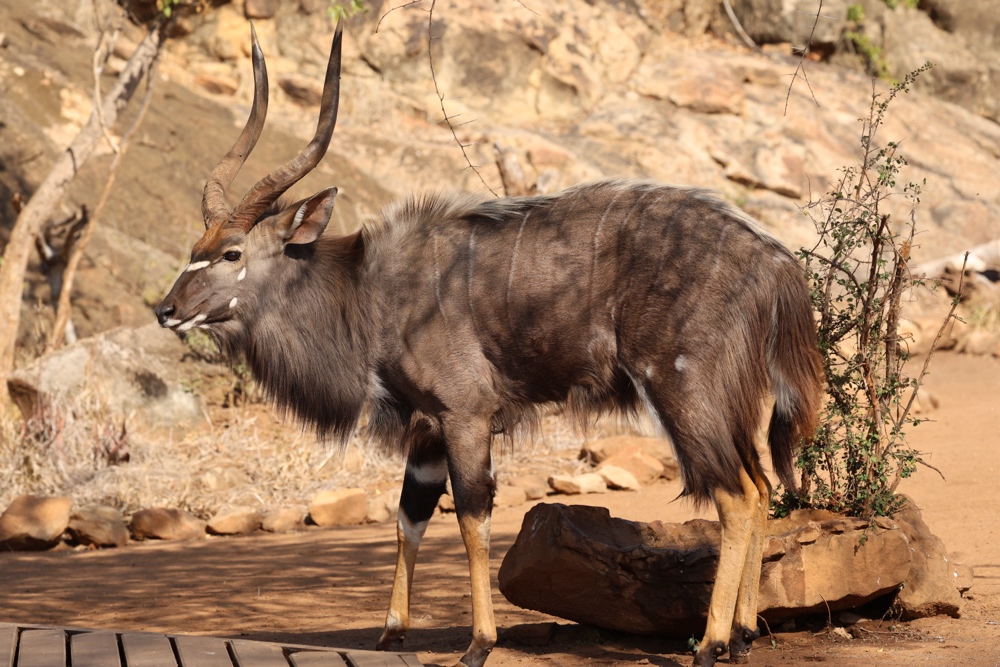 Nyala male at Baobob Hill House, Pafuri
Check out this male who wandered up into our pool area at the Hill House. I was filming birds in the bird bath when he strolled up right behind me and proceeded to drink all the bath water. I opted to stay still and stay put while he walked right by me. Not everyone in the group approved of my choice.
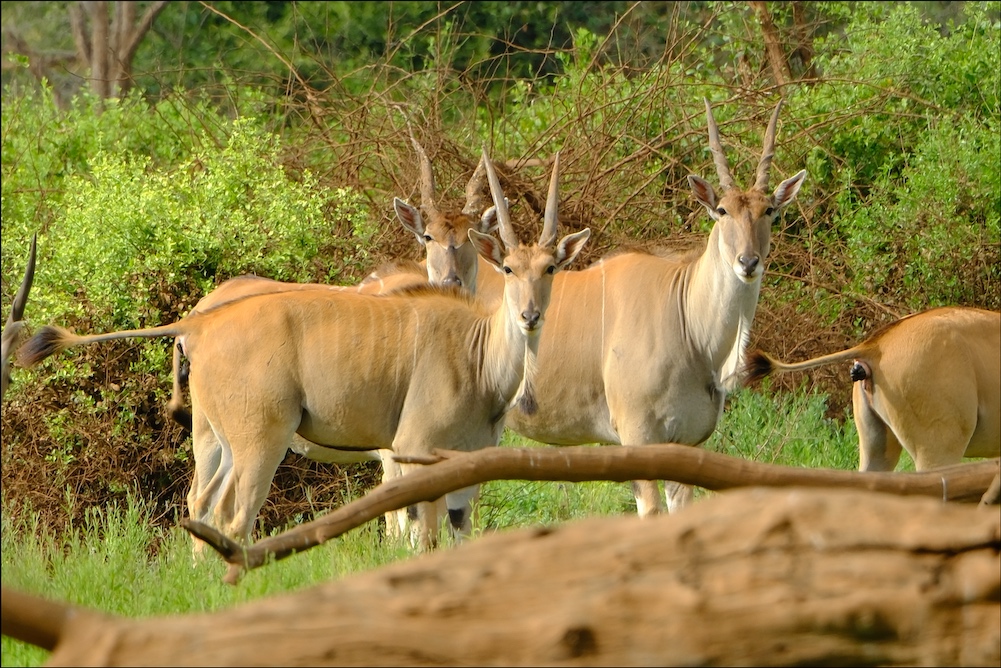 Common Eland
I was spoiled on my first trip to Africa two years ago as we started the trip in Pafuri where saw eland frequently. We’ve seen them elsewhere, but not often, and they are dramatic to see. Especially when around smaller antelope like impala. Both sexes have horns.
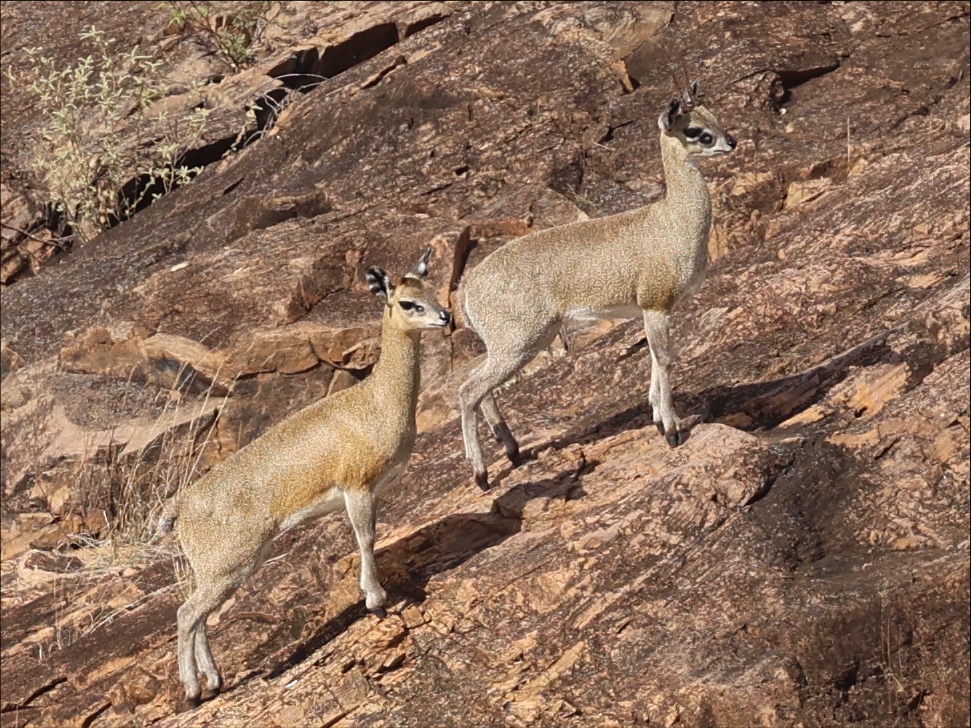 Klipspringer pair in Gonarezhou
The small antelope are amazing and elusive! Unlike the large herding antelope (impala, wildebeest, etc.) they tend to live in pairs and remain monogamous. If you encounter them up close, they will dash and hide through the rocky terrain that they prefer, making it hard to get close-up photos. They walk around on the rocks Michael Jackson style, on the tips of their blunt hooves.
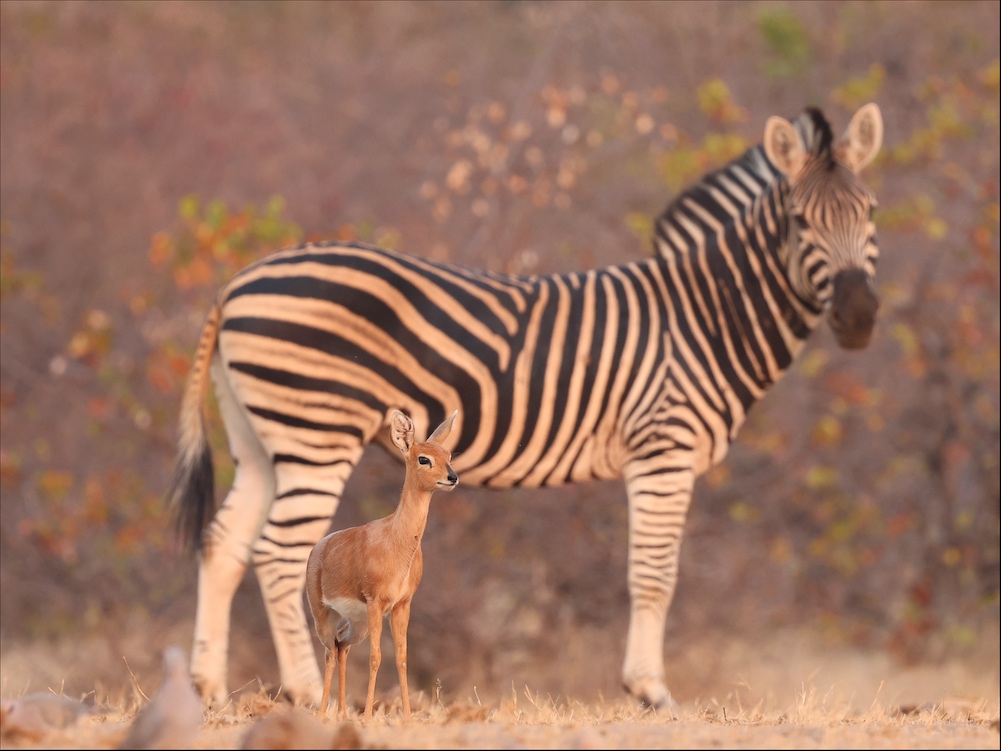 Steenbok with zebra in Tuli Block / Tswehe
The most ubiquitous small antelope for us have been the steenbok, which we have seen just about every game drive we’ve been on from South Africa to Zimbabwe to Botswana to Namibia. Usually we see a pair together, and you have to search for the tiny spiky horns to identify the male. I have better steenbok photos than the one I’m sharing here, but I love how the zebra behind this cute lady shows how small and delicate they are.
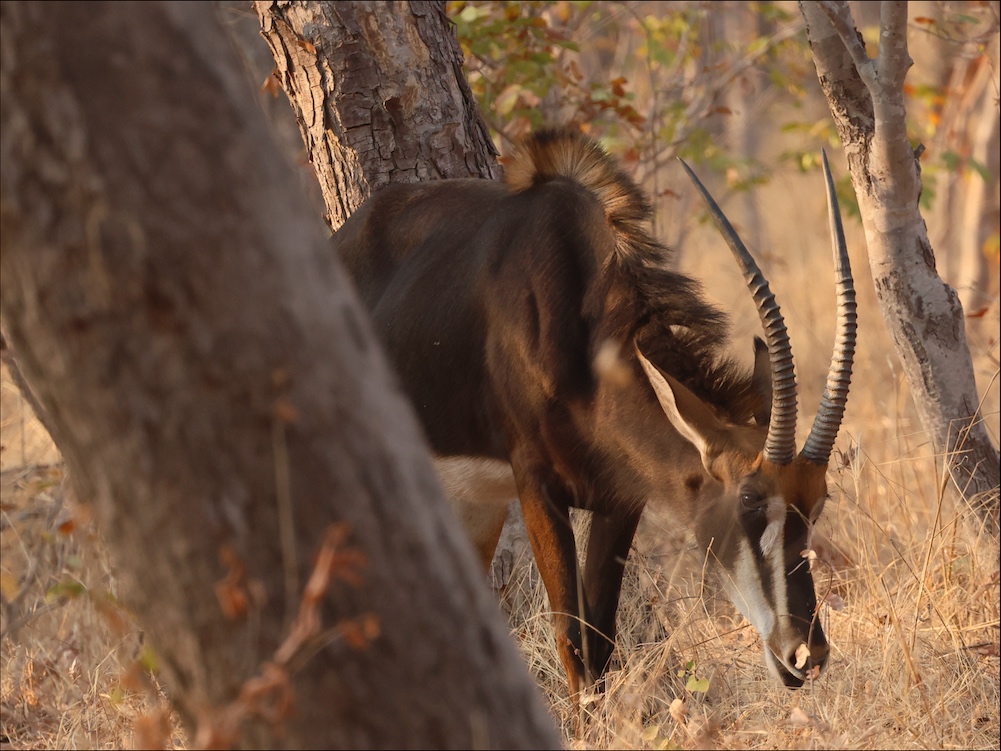 Sable Antelope in Chobe
Sable are one of the big and rare antelope that we seek out. Because the females have horns too, it isn’t easy to tell when looking at an individual if it is male or female. We only found a small group, and only once during the entire trip so far. Unlikely to see more as we’ve left their range.
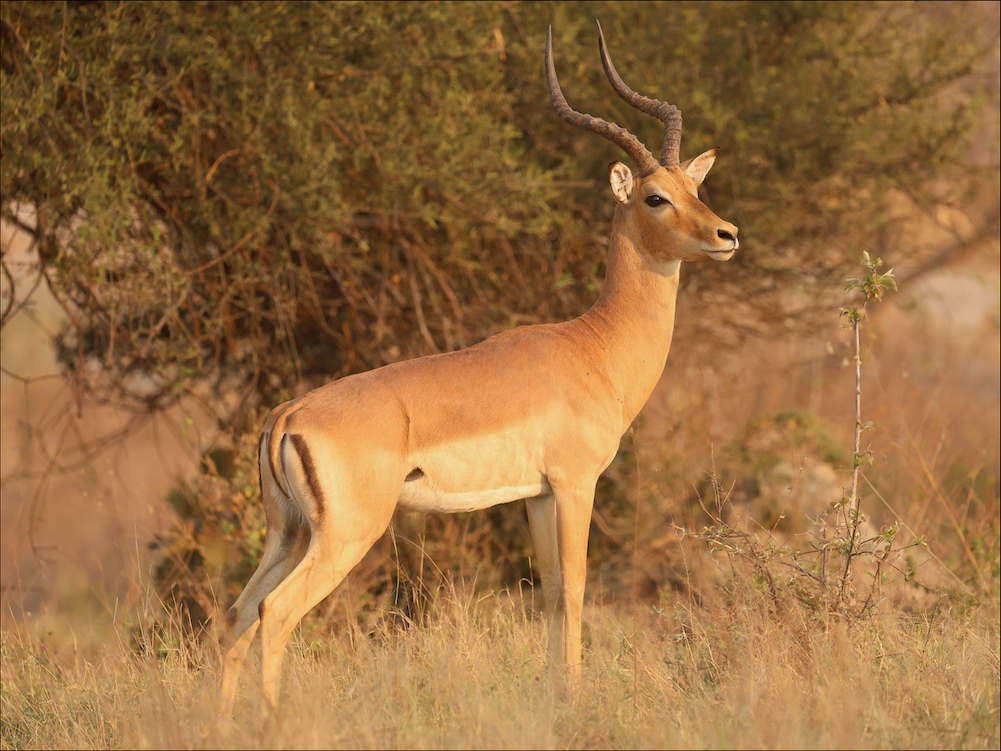 Impala buck in Chobe / Savuti
Impala are just about everywhere in southern Africa, with the only region they’ve been absent so far being the Central Kalahari where the springbok took their place.
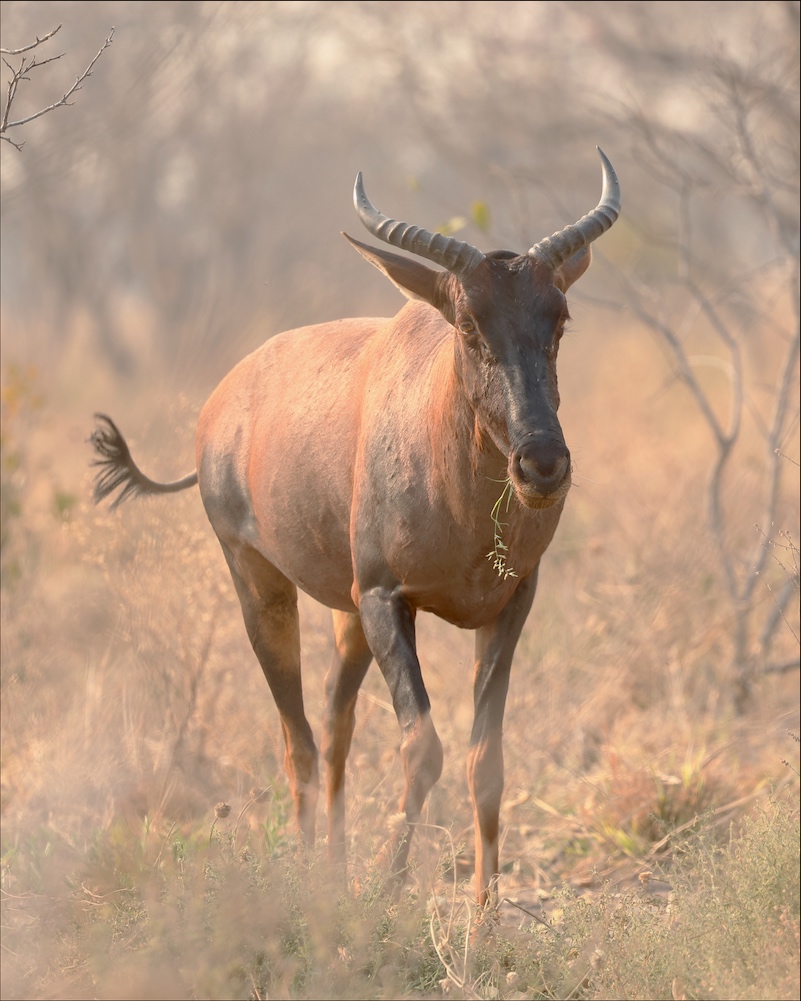 Tsessebe in Chobe / Savuti
Another rare-to-us antelope, the tsessebe is a horse-like antelope that is large and fast.
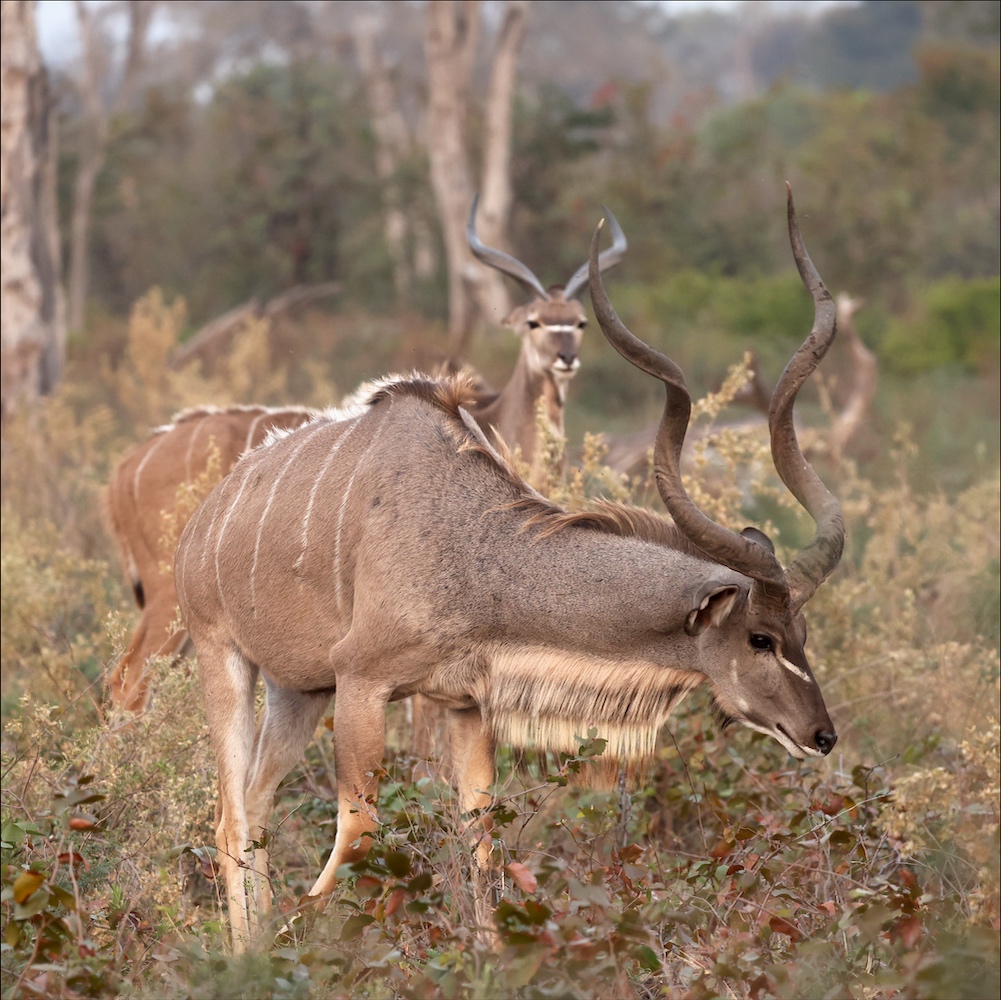 Greater Kudu male in Moremi
We see lots of kudu but still stop and stare when we encounter a grizzly old male with a long beard.
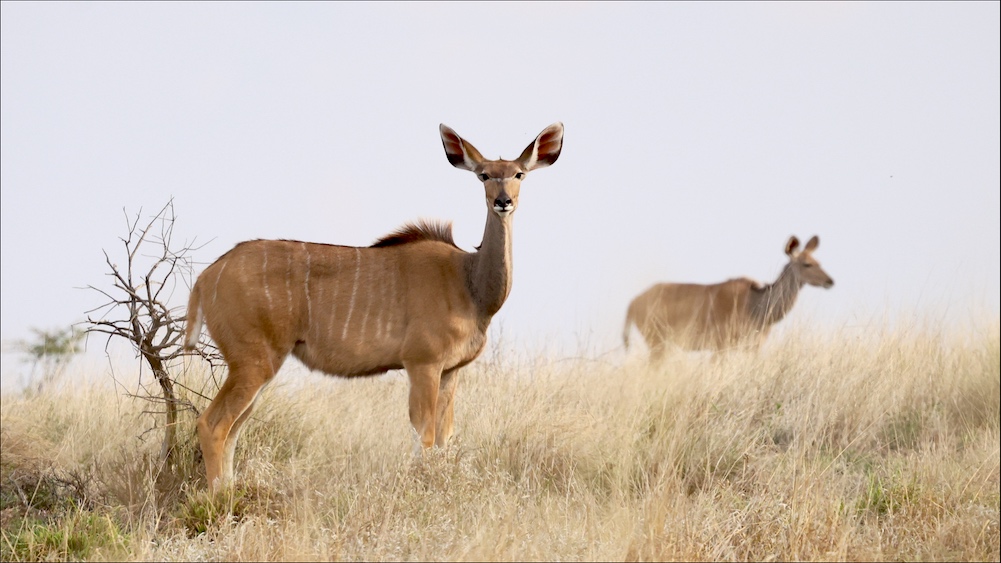 Greater Kudu female in CKGR
Males and females both have the vertical white stripes, and the females lack horns.
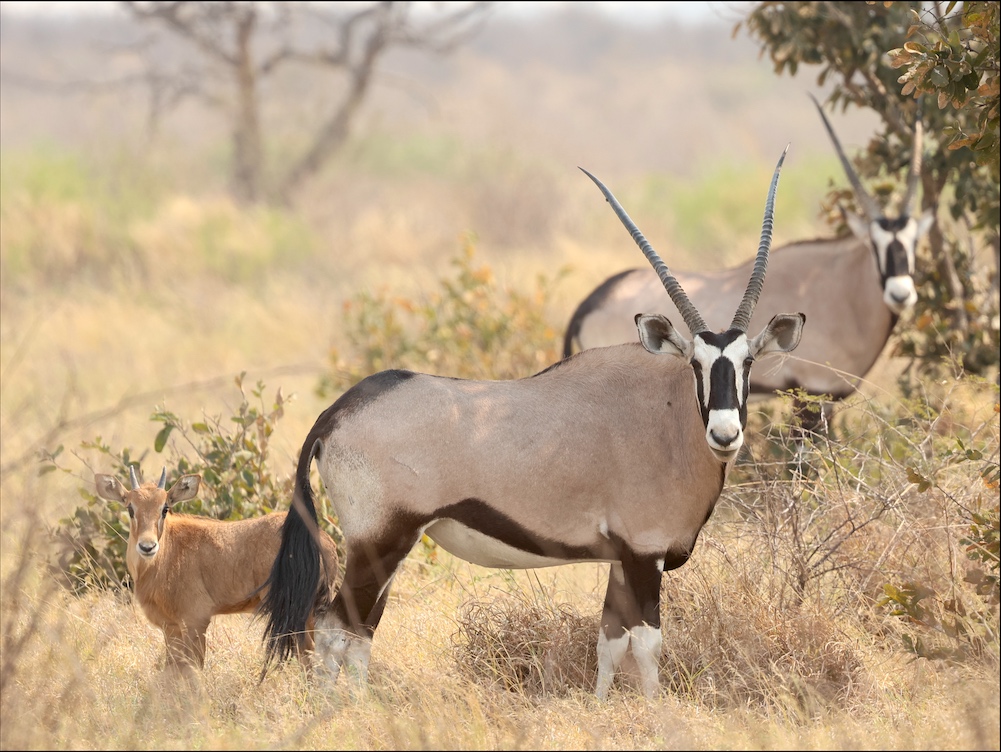 Gemsbok with young in CKGR
Love these guys and gals, and what you see here is most likely two adult females with a new calf. They are in the oryx genus and highly adapted to the dry deserts they inhabit.
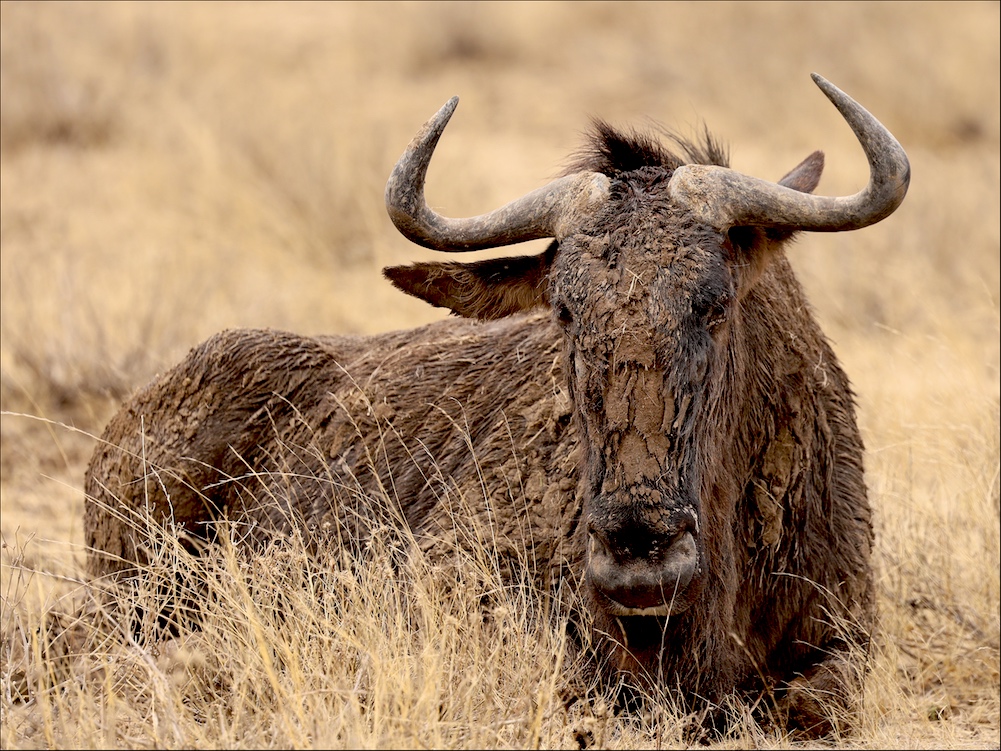 Muddy Blue Wildebeest in CKGR
Yes, wildebeest are antelope and (to me at least) the most distinctive of the group. We’ve seen a few herds on this trip, mostly recently a large one in the Kalahari, but most of our sightings are singles or a few mixed with a herd of zebra.
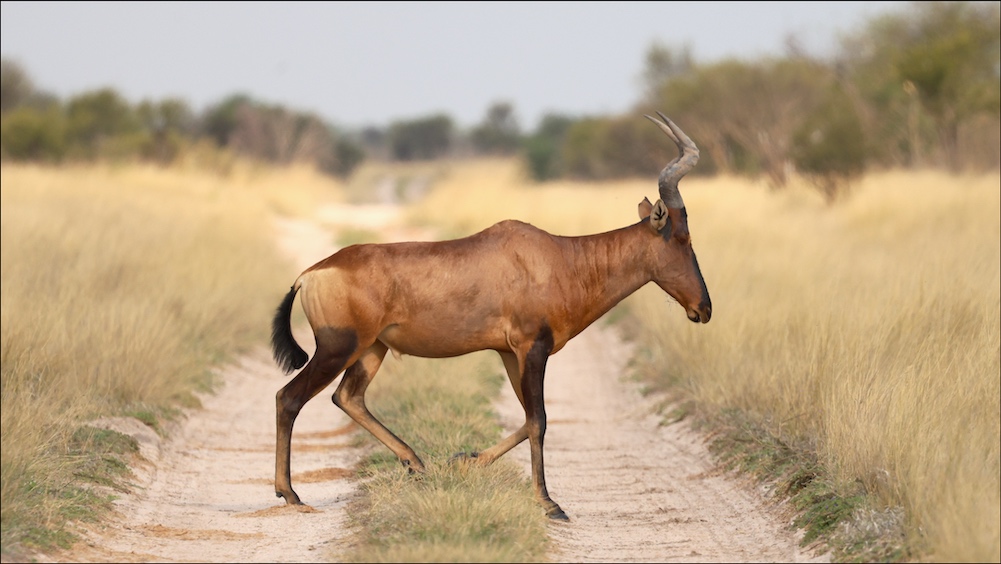 Red Hartebeest crossing road in CKGR
We saw many of these (finally!) red hartebeest on the western edge of the Central Kalahari when we transitioned to scrubby forest away from the desert grassy pans that were dominated by gemsbok and springbok. Another horse-like antelope, these are big and easy to confuse with the tsessebe.