

Namibia: Damaraland, Spitzkoppe, and Walvis Bay
We left Etosha to begin our whirlwind dash across Namibia, from north to south.
With only one-night stays planned for the rest of the trip, other than two nights in Cape Town, we carefully planned our routes to maximize our driving time. We optimized for scenery and birds.
Our first stop was in Damaraland at Mowani Mountain Camp. This is a camp associated with two nearby lodges, and our camp had a nice snack shop and pool. We both needed rest breaks and some Wi-Fi time, so we hung out at the pool on arrival and booked dinner at the higher-end lodge across the main road and a game drive the next morning. Dinner was excellent, with a nice ambiance and a better-dressed crowd than we are used to.
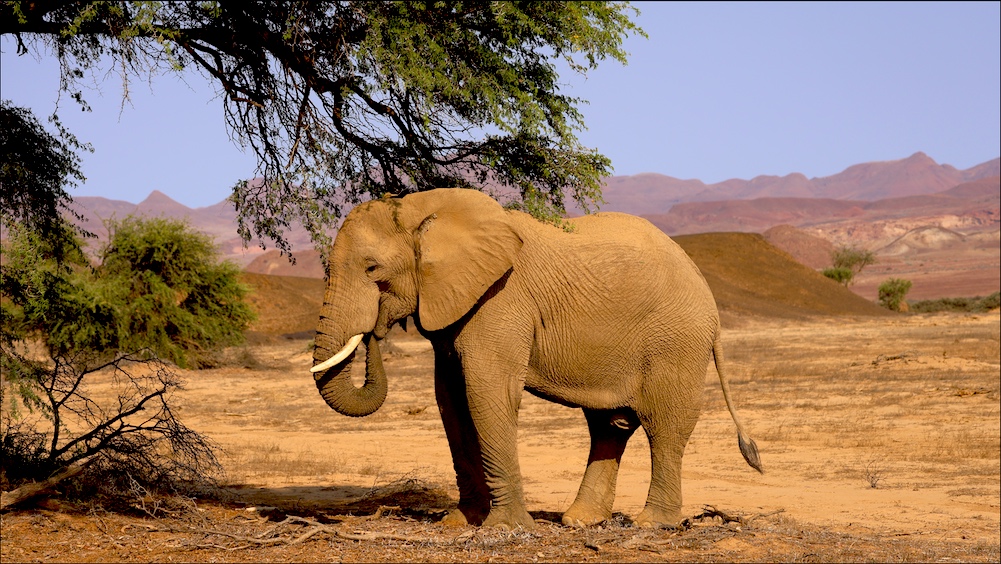 Desert-adapted African elephant bull
Our game drive was a rough and rapid 70-mile out-and-back through a dry riverbed toward the Atlantic Ocean, in search of the area’s desert-adapted elephants. These elephants are smaller and have babies less often, so their family herds are smaller. The terrain was beautiful, and seeing the elephants in a different setting made up for the drive’s lack of focus on birds.
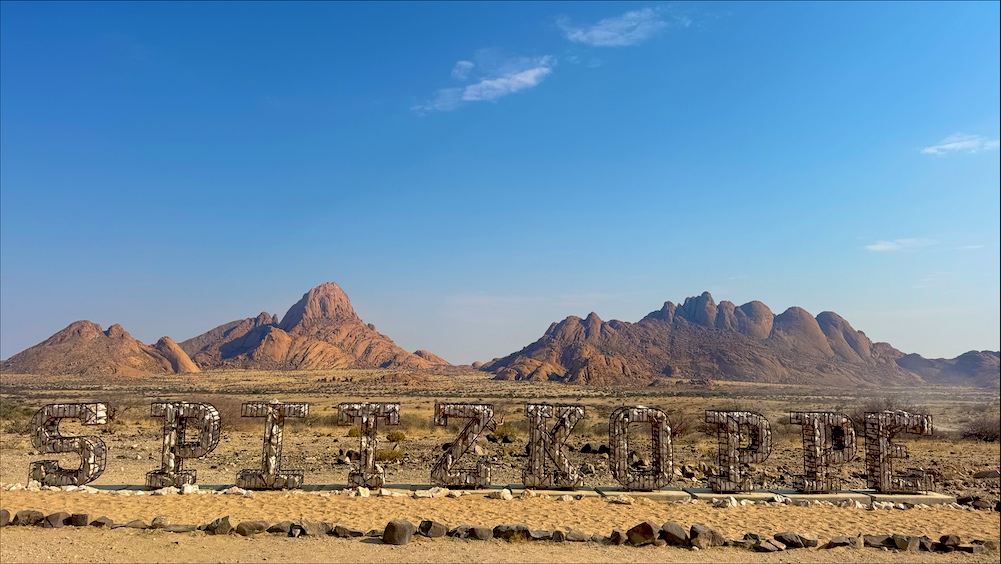 Spitzkoppe and sign
Now firmly in mountain and koppe territory, the driving was a real treat. Spitzkoppe, a dramatic group of granite peaks with a rustic campground, would be our next stop. The road in was pretty awful, but we made it in time to be firmly in the mad rush for the unwanted “go choose your own campsite” game.
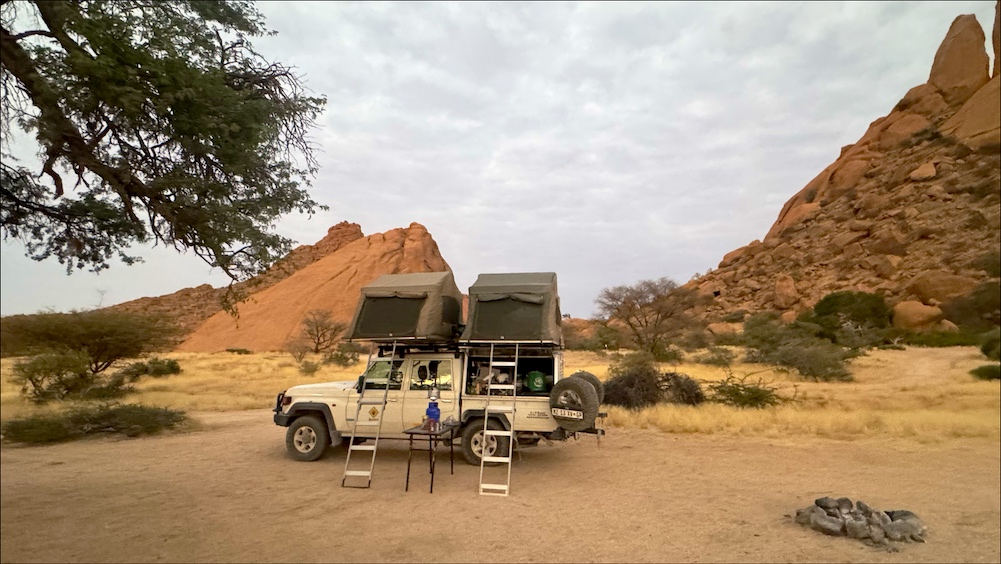 Camp at Spitzkoppe
I can’t complain about the campground or the sites - they are spread out and nestled against the hills - though as we wandered around, we saw them get claimed one by one. That said, we had a couple walk over to our site and complain about our loud talking (it was only 7:30 p.m., but yeah, we were being a bit loud) and proclaim in a stern German accent, “And you aren’t even in an official campsite.” Ken and I looked around and saw a table, fire ring, and toilet that could only belong to our site. Shrug.
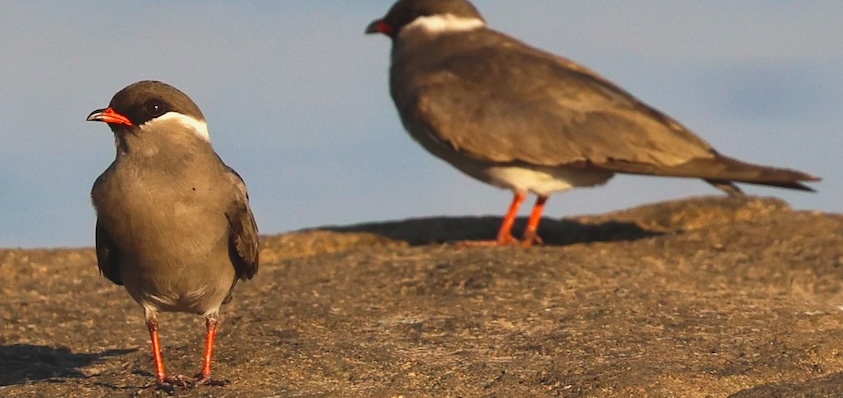
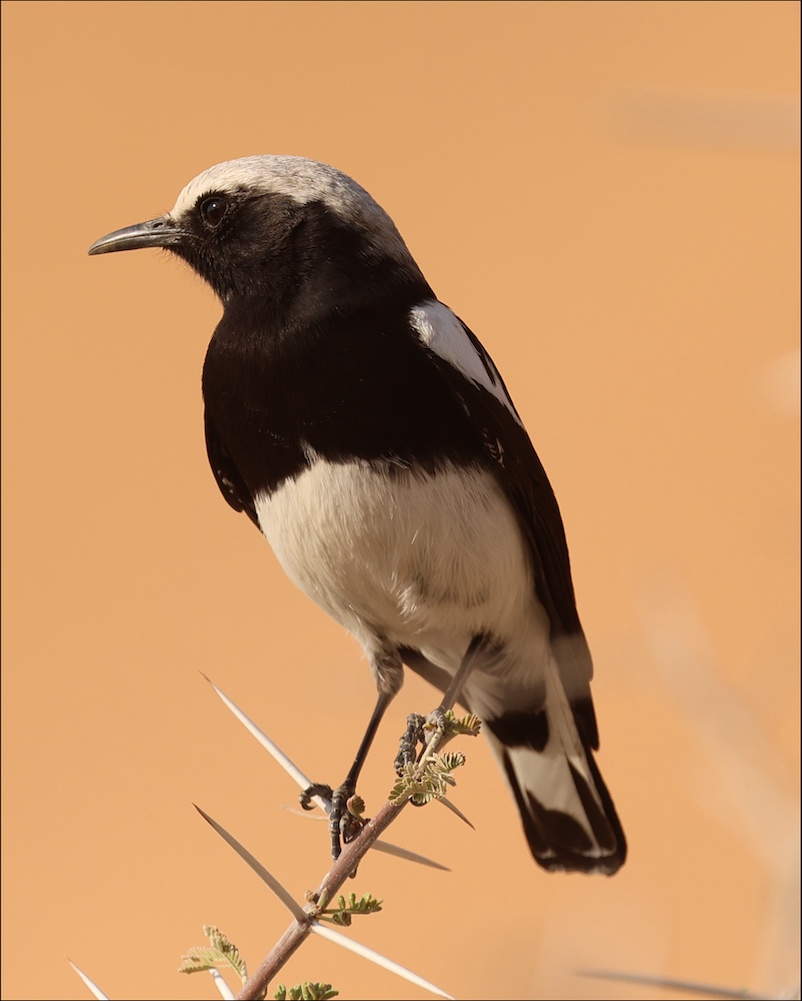 Mountain Chat
We had entered a new biome, which meant many new birds for us, such as the mountain chat. This bird and the pale-winged starlings couldn’t be missed, but our primary objective would be to search the scrub at the base of the rocky hills for the Herero chat. This is apparently a challenging bird to find even if you have a guide. We were unsuccessful. Gotta leave something for next time.
After Spitzkoppe, we turned west toward the Atlantic Ocean and the beginning of the Namib Desert. We took an alternate route that would get us to the coast earlier for a meandering drive down to Walvis Bay. Along the way we found Rüppell’s korhaan, which was on my target list but unexpected given the terrain: some of the most barren desert we’ve seen so far. No trees and barely any vegetation.
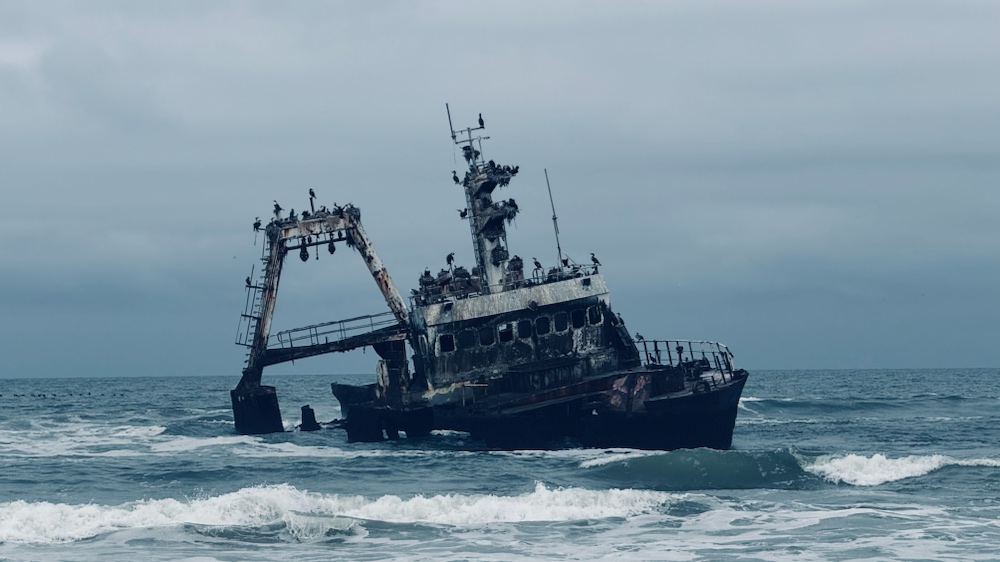 Zeila Shipwreck
Our first stop (and first chance to look for coastal birds) was at the Zeila shipwreck. The weather was drizzly, windy, and cool, and we were hopeful for a change by the time we reached Walvis Bay.
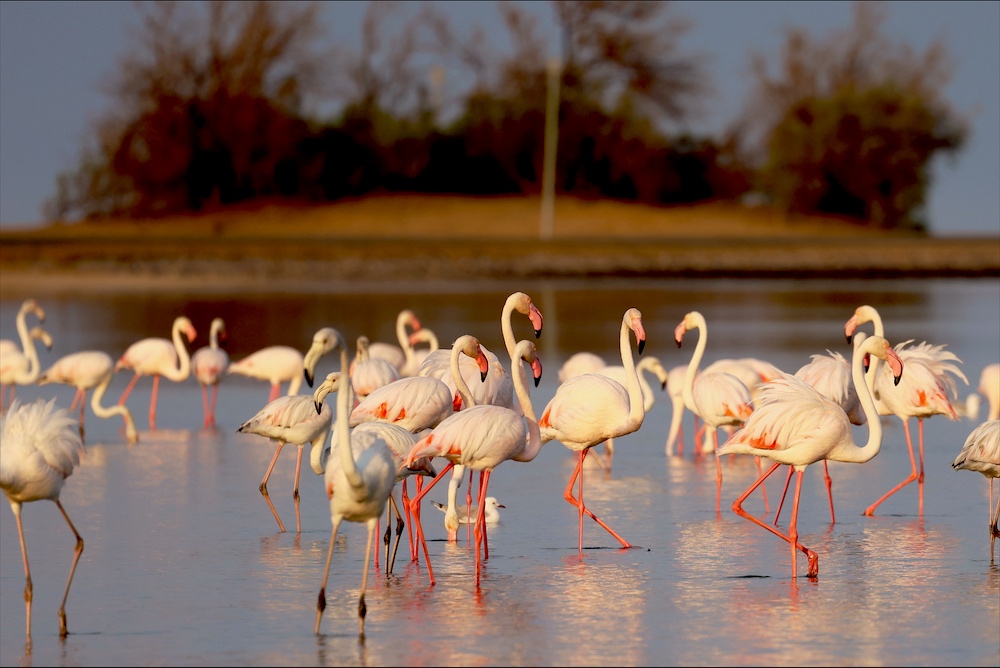 Greater Flamingos at Walvis Bay Lagoon
We had seen lesser flamingos by the hundreds in Nata Bird Sanctuary and were excited to see greater flamingos in Walvis Bay. They were there, probably in the thousands, intermingled with smaller numbers of lesser flamingos. Our camp at Lagoon Chalets was just a few blocks from the lagoon, which we returned to twice to see the vibrant birdlife.
Walvis Bay is one of the largest cities in Namibia and home to the country’s principal commercial port. Even so, it still felt like a sleepy tourist town to us.
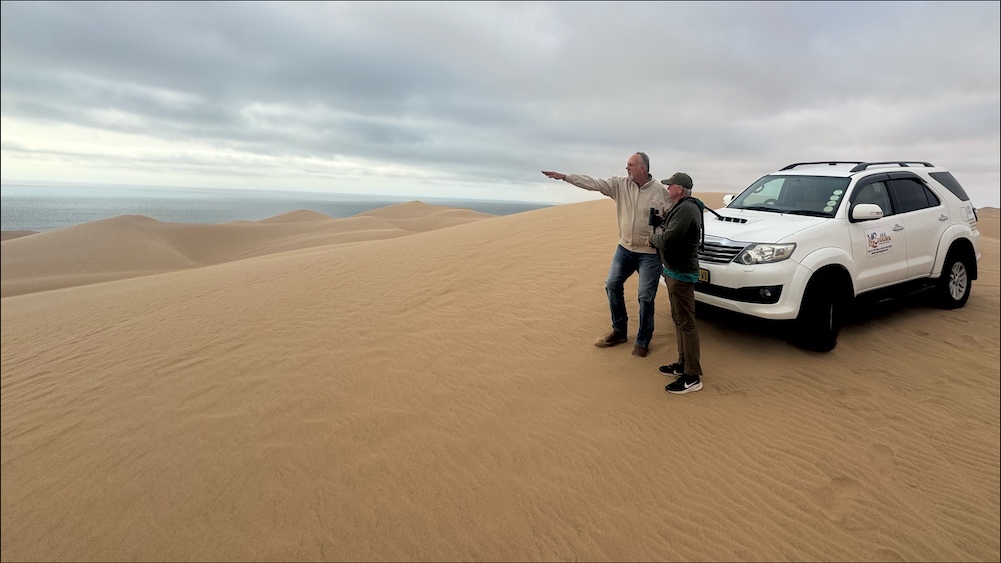 With our guide at Sandwich Harbour
In our original plan, Ken and I would self-drive the coastal dunes of the Namib Desert to Sandwich Harbour, but after Ken did more research, he opted to hire a guide. Our insurance would not cover such a self-drive, and there are plenty of stories out there of overambitious drivers getting stuck or worse. It was good that we booked a guide, as officials shut down all self-driving earlier in 2026.
The drive was a blast, reminiscent of riding the dunes in Florence, Oregon, but at maybe two to three times the scale. These dunes are massive. On the way, we spent a few minutes observing the salt-harvesting and production facilities south of town. The scale was huge.
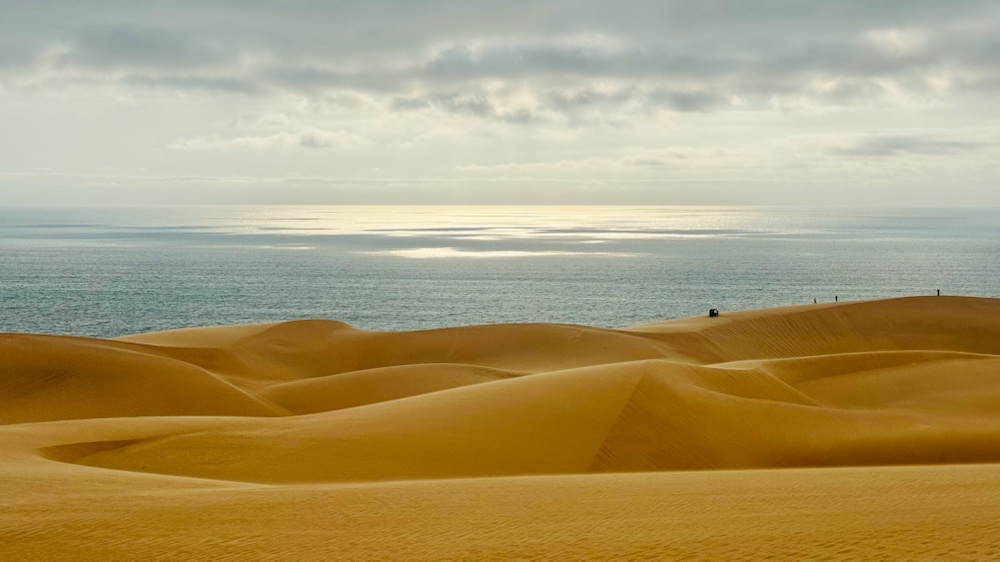 Sunset dunes at Sandwich Harbour
Despite the evocative name, Sandwich Harbour does not appear to have been named for travelers getting sandwiched between the tide and the dunes. Its origin is uncertain: it may have been named after an English whaling ship called the Sandwich, which worked in the area during the 1780s, or it may be a corruption of the German word Sandfische, a type of shark found there. Travelers can, however, get trapped between the tide and the dunes if proper care isn’t taken.
Sadly, our sunset drive didn’t turn out as we had hoped because of the weather: high winds and a clouded-over sunset. Still, we had a good conversation with our guide about the beauty and struggles of Namibia. We ate dinner at our lodge/camp restaurant, then walked along the lagoon in the morning before leaving the coast to explore more of the Namib Desert.