

Southern Tip of Africa
We left Cape Town with a prime directive: find the endemic and highly localized Cape rockjumper as we wandered east along the Cape coast.
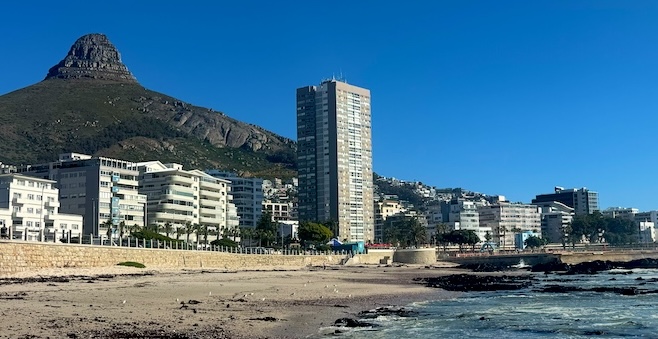
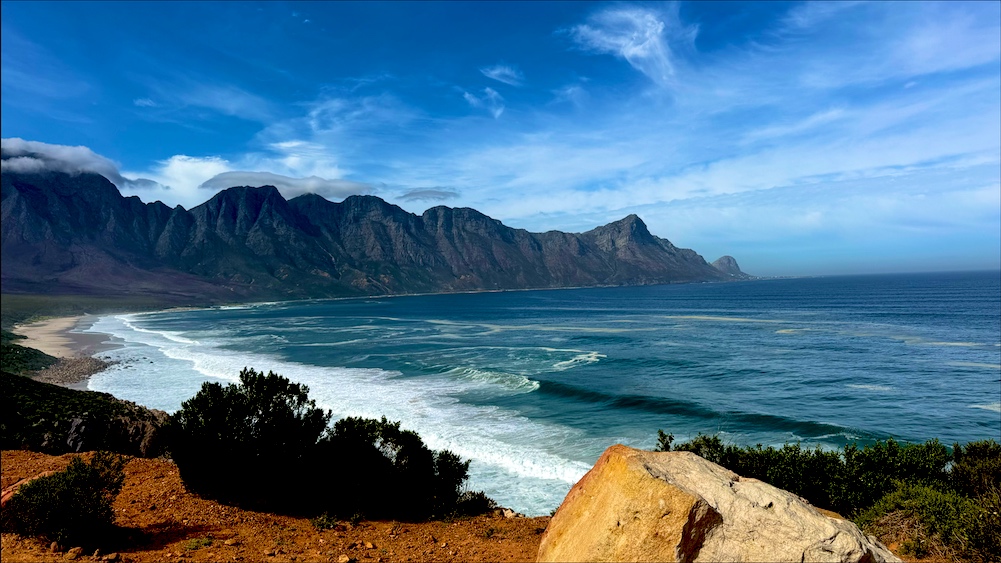 Approaching Rooi-Els
Our best chance would be the coastal town of Rooi-Els, though we wouldn’t be searching on the coast itself. The Cape rockjumper hangs out on the boulder-strewn slopes in the foothills of the impressive Kogelberg mountains and Klein Hangklip.
I have a lot of bird “targets” on this trip, but the two rockjumper species comprise their own family (Chaetopidae) and can be found only in South Africa and Lesotho. Our circuitous route would give us opportunities to find both. This would be a special find for me (and Ken!).
The drive in was spectacular, and Ken and I both noticed some whale activity in the bay. We pulled over to watch a humpback whale swimming on its back and slapping its flippers together.
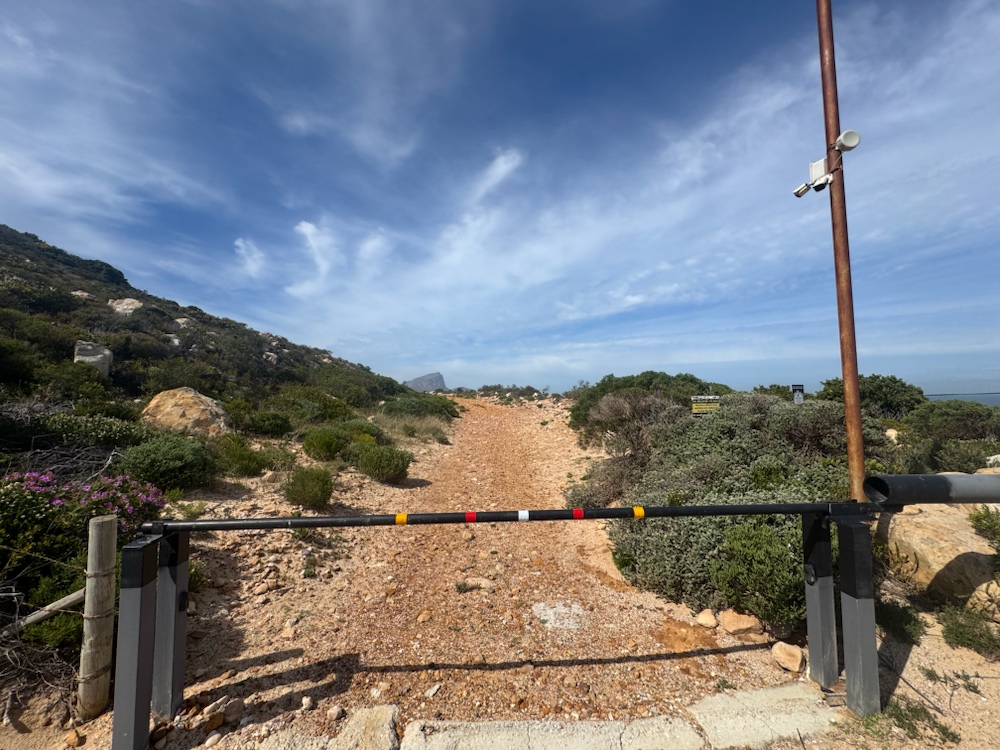 The Rooi-Els gravel path to Cape rockjumper territory
We parked the car before this gate and started our walk, finding plenty of birds along the way. We noticed a couple far ahead of us and eventually caught up with them. They told us they had been out for almost two hours with no luck, but they did help us spot the ground woodpecker, another holy grail species for many birders coming to Africa.
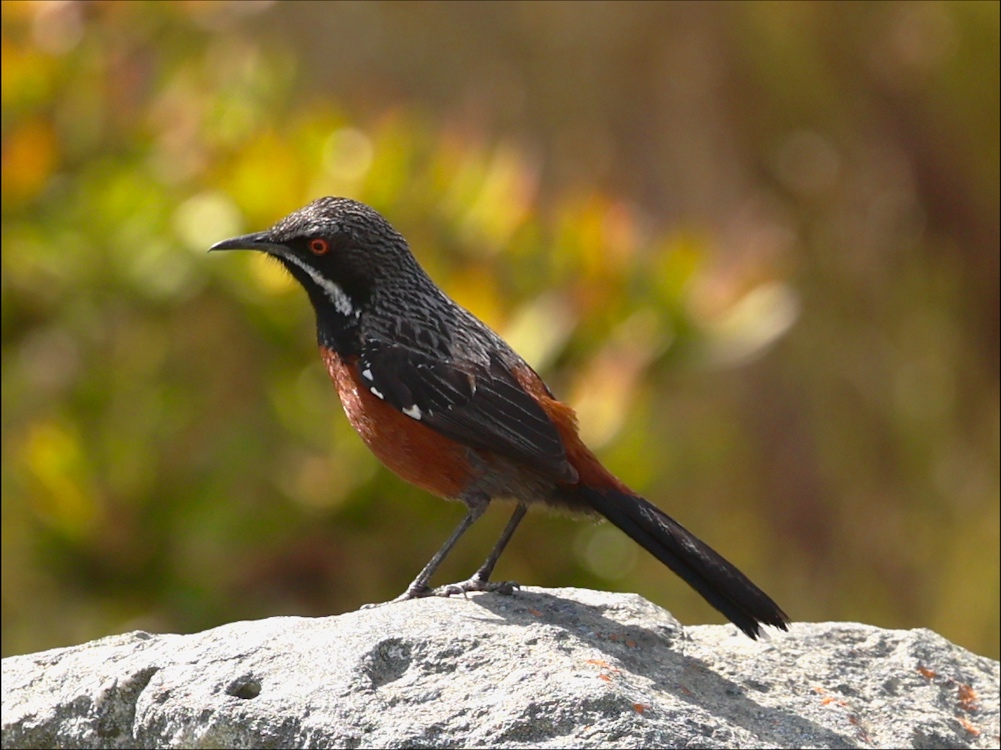 Cape Rockjumper
We persisted and were rewarded, spotting a male and female about 2 km down the path. They were… jumping from rock to rock looking for food, and they posed often enough for me to get some good photos. The area was beautiful and we also enjoyed the flowers, the seascape, the sunbirds, and lizards.
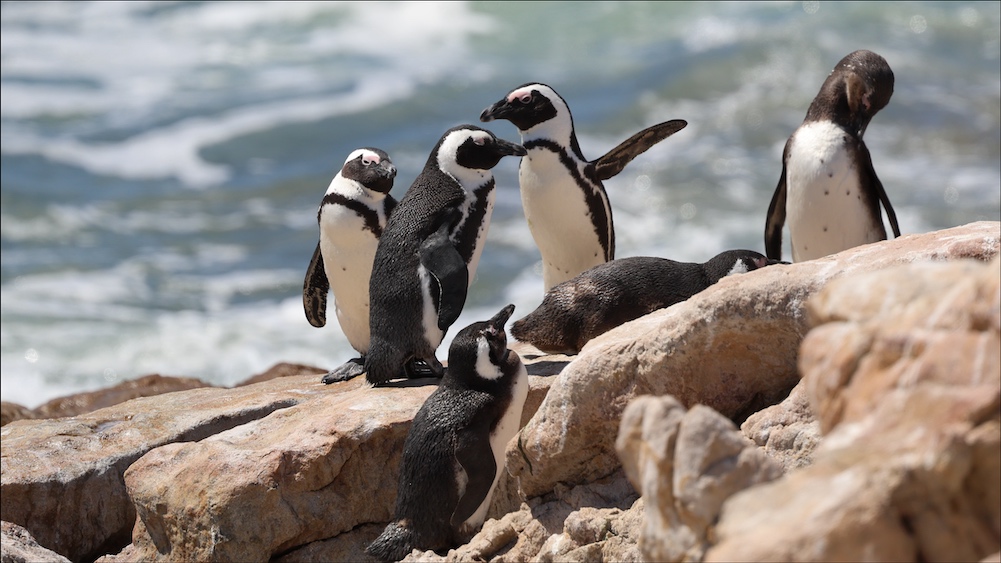 African Penguins at Stony Point
Just around the point from Rooi-Els is the African penguin colony at Stony Point. This stop was more of a check-the-box visit to see the penguins. They were right there among the cormorants, oystercatchers, and gulls. They are so awkward on land and fun to watch as they waddle around. The work done there to restore their nesting habitat is amazing.
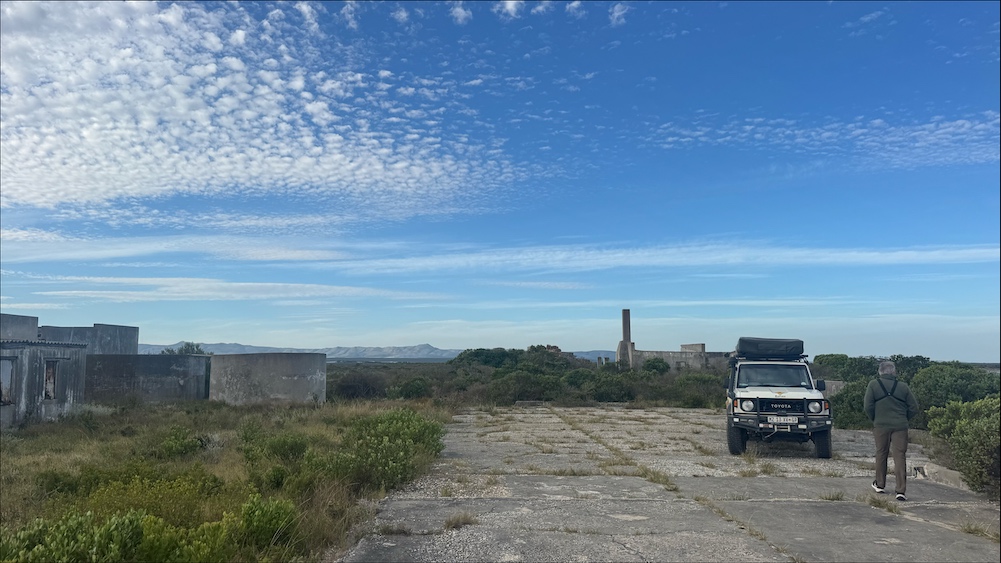 Exploring the old salt pans at Agulhas NP
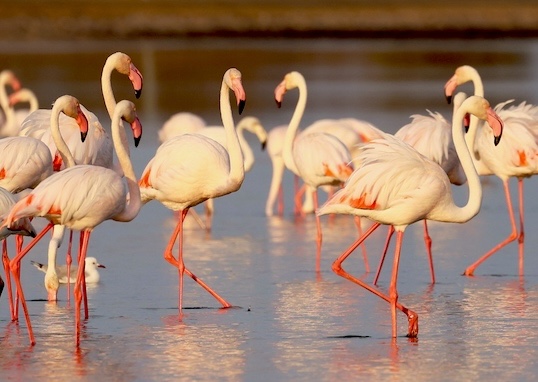
Our stop for the night would be Agulhas National Park, home to Cape Agulhas, the southernmost point of the African continent (not the Cape of Good Hope). It is a smallish park that is clearly centered on tourists visiting the tip, but we used the afternoon after our arrival to go inland and explore some historic salt pans and the wildlife there. We saw pelicans, flamingos, Caspian terns, and an array of other shorebirds and waterbirds.
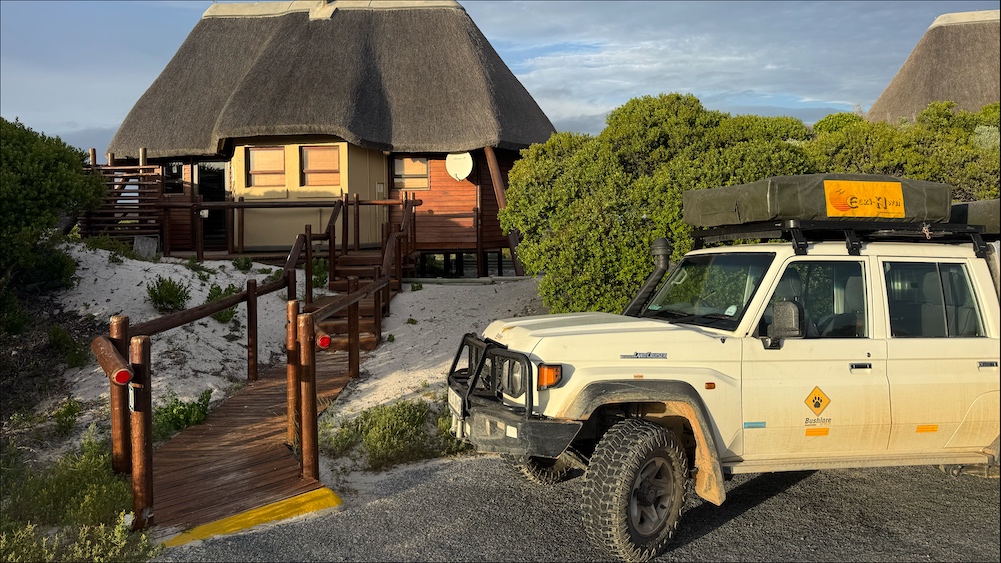 Our chalet at Agulhas NP
Ken and I were staying in more cabins and chalets at this stage of our trip, and it was a welcome change. After some fine Italian food in the nearby town of L’Agulhas, we enjoyed the sound of the surf and coastal birds in one of the cozy park chalets.
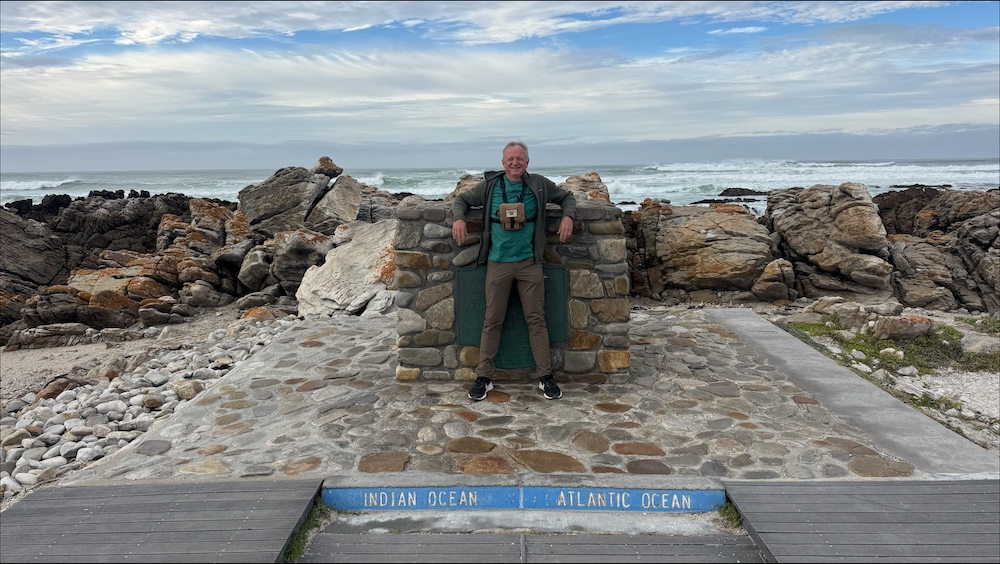 Ken at the southern tip of Africa
We saved our visit to the tip of Africa until the next morning, when we wandered around the tide pools and the massive and very cool relief sculpture of the African continent near the southern tip monument.
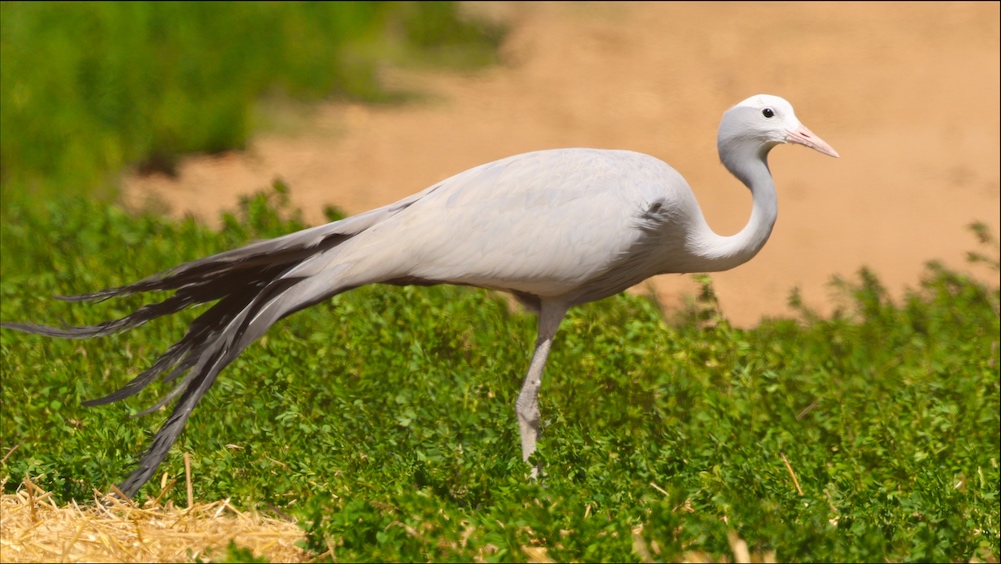 Blue Crane
Our time on Africa’s southern coast was complete, and we started making our way to the vast network of interior mountains that would dominate the rest of our journey as we worked our way back to Johannesburg. We navigated toward the mountains on gravel roads through the grain-farming belt east of Cape Agulhas. The terrain was beautiful, and we spotted some blue cranes feeding in one of the fields, our first “official” sighting. We suspect we’d seen some while cruising down the Western Cape coast but weren’t completely confident. Cranes are magnificent!